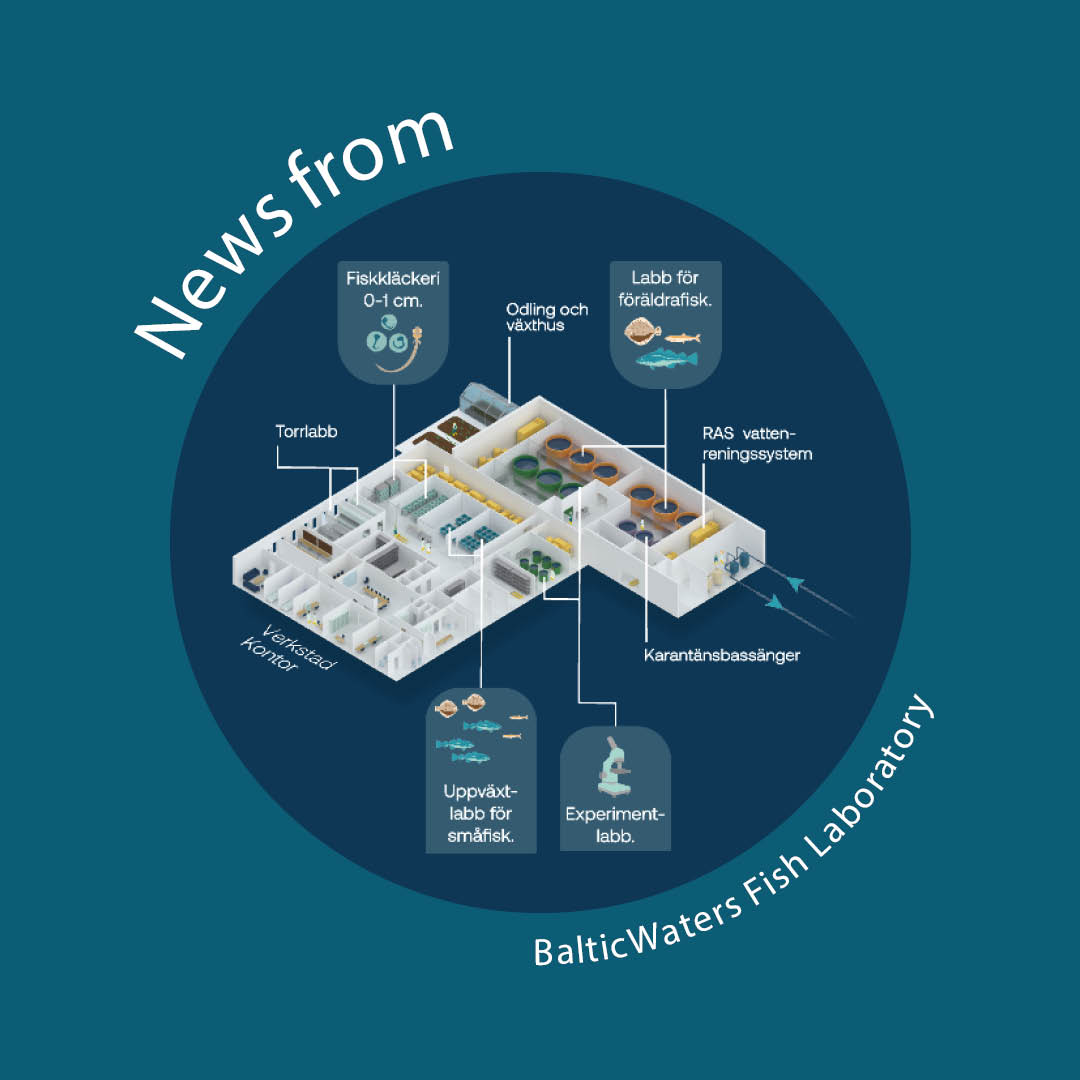
It’s humid, and we sense thunder rumbling in the distance as we arrive at BalticWaters Fish Laboratory. We’re here to meet Teddy Dahlberg – a person with a wealth of knowledge bubbling beneath the surface. A stroke of luck for BalticWaters, who can now call him a colleague. Teddy is the laboratory’s second operations technician, ready to contribute to the work ahead.
When we meet Teddy in one of the lab’s offices, he’s standing there with a screwdriver in hand. Even though the facility isn’t yet up and running, there’s plenty to take on.
– I heard on the radio that BalticWaters was building a laboratory, and I immediately felt that I wanted to be part of that meaningful journey, Teddy says as he assembles one of the many office desks.
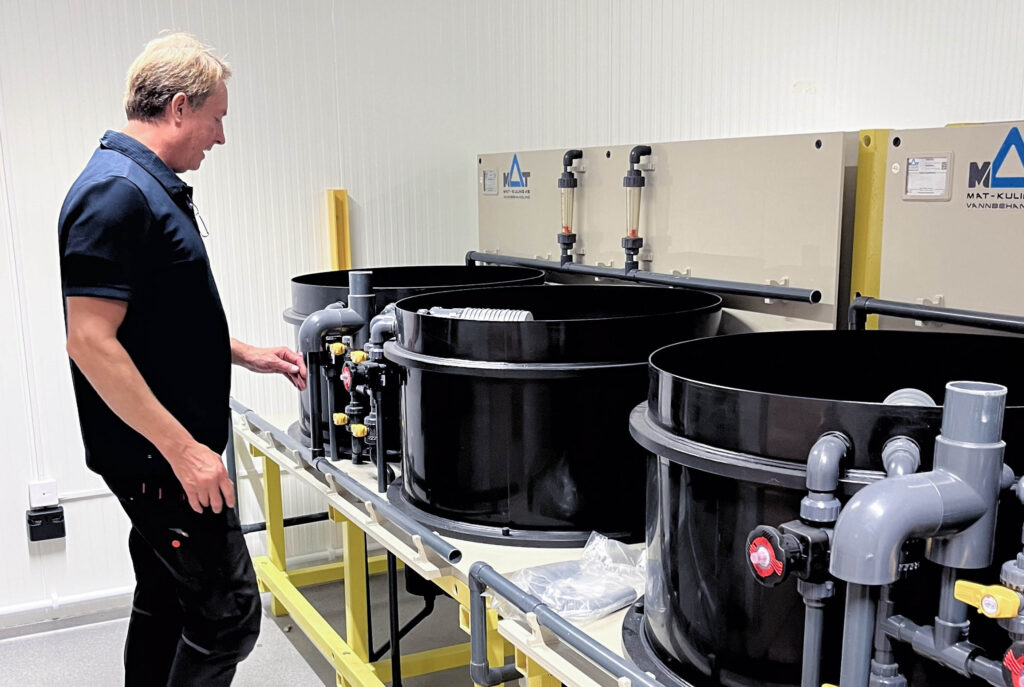
Normally, assembling furniture won’t be part of his duties. Together with Nathalie Navarrete and Mats Anderling, he will help ensure that the facility operates as a stable and efficient platform for future research. Among other things, he’ll make sure the lab’s water treatment systems work properly, adapt systems to the needs of the fish and the research, and ensure that both the equipment and environment maintain high standards. It’s a role that seems tailor-made for Teddy.
– I’m an environmental and measurement technician, and I’ve previously worked as an operations technician at Trobo, so I’m used to varied work and enjoy solving problems,” he says.
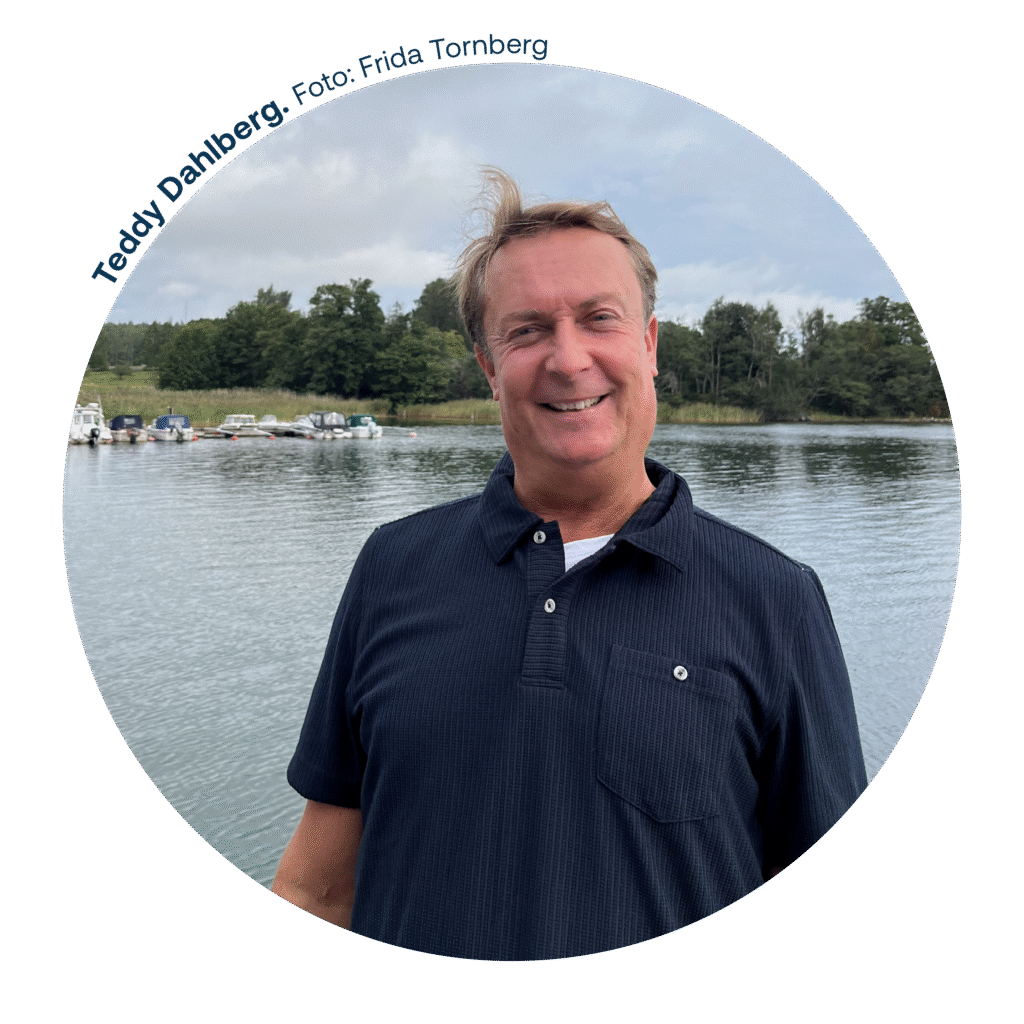
Five quick questions:
Name: Teddy Dahlberg
Age: 58
Previous roles: Operations technician at Trobo/Trosa Municipality, research and development at ventilation and air purification company Camfil, furniture maker for TV productions, among others.
Favourite species in the Baltic Sea: A lively and cheerful otter.
The first thing I will do in my new role: Train in Recirculating Aquaculture Systems (RAS), a closed system that allows full control of the water.
Beyond the office area, the fish research laboratory is taking shape—designed for studies on fish in different life stages. Curious, we walk through the research facilities and stop by one of the tanks that will eventually house cod eggs. It’s clear that Teddy is in the right place.
– Water has always been a big part of my life. Sadly, over the years, I’ve seen how our seas and waters have deteriorated, so contributing to improving the Baltic Sea’s environment will be refreshing.
For 30 years, Teddy has lived in the area where the laboratory is located and knows the bay of Tvären and the archipelago well.
– I do a lot of freediving, and Tvären is one of the places I once mapped to identify potential sites for mussel farming. That knowledge has already come in handy,” Teddy laughs, now on his fifth day at work.
The rumble of thunder seeps through the walls as the rain begins to pour. It’s time to let Teddy get back to familiarizing himself with the laboratory. We leave with a sense of calm—there’s no doubt that Teddy’s experience and local knowledge will be of great value to BalticWaters’ fish research laboratory.
Welcome Teddy to the foundation!

About the fish research laboratory
Goal: The laboratory is a place that enables new knowledge about cold-water fish species in the Baltic Sea, such as cod, herring, and turbot, which in turn promotes biodiversity in the Baltic Sea.
Location: Studsvik Tech Park outside Nyköping
Capacity: The building will contain laboratories that can house fish at different stages of life. There will be a total of 12 tanks for adult fish. There will be hatcheries for fish species that lay eggs on a surface (e.g., herring) and hatcheries for fish species that lay eggs in the open water (e.g., cod). In total, there will be over 70 tanks for holding eggs, larvae, and fry.
Water system: All water in the tanks and hatcheries circulates in RAS.
Commissioning: Autumn 2025
Read more about BalticWaters Fish Laboratory here.