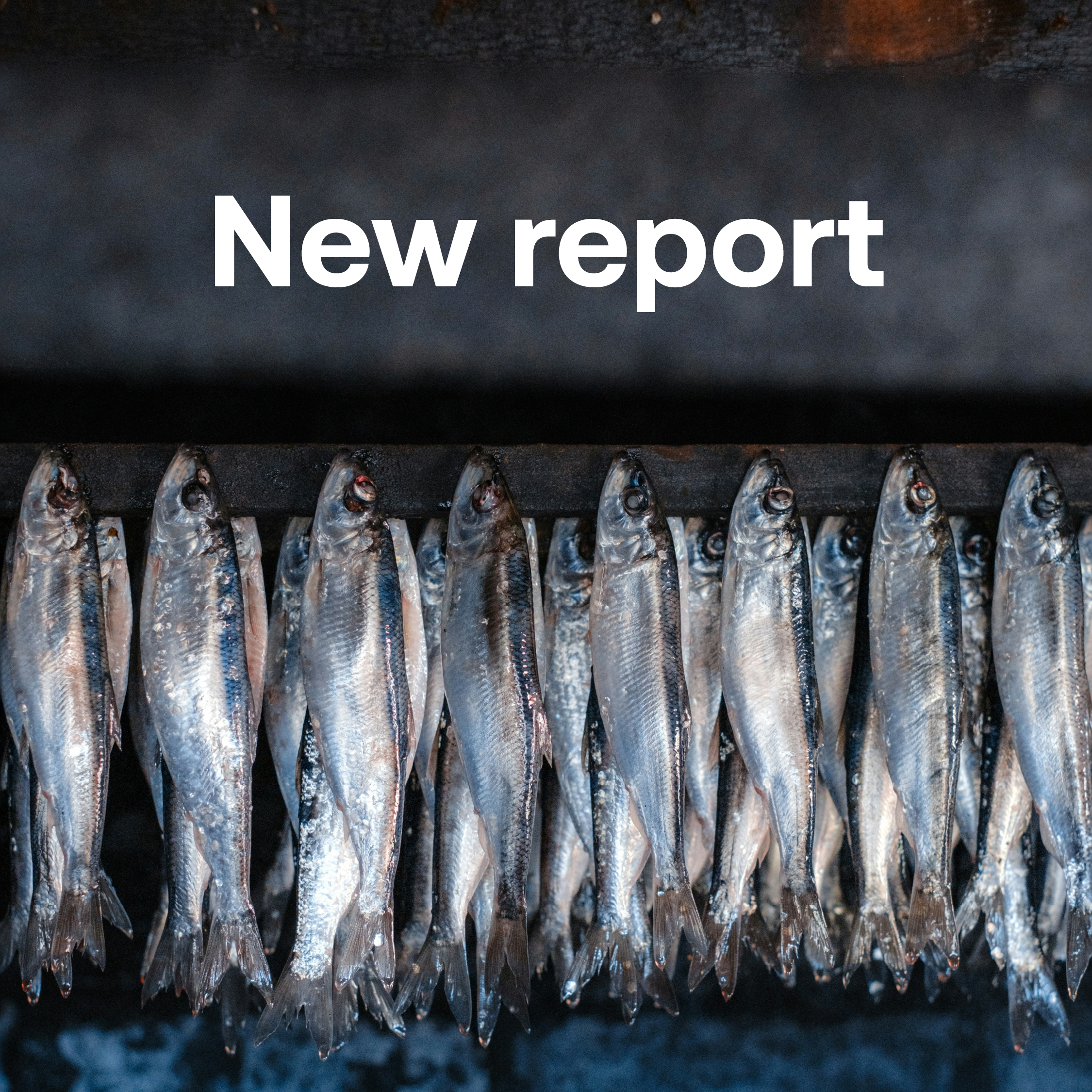
Sweden can generate billions in value, create new jobs, and strengthen its food security by processing more of the Baltic Sea’s fish into food in Sweden, instead of exporting the fish for feed production in Denmark.
A new report from BalticWaters shows that around 70–75 per cent of Swedish herring catches are used for large-scale feed production, mainly in Denmark. This means that the majority of value creation takes place outside Sweden and that the fish is largely used for animal feed with very low value added. Today, reduction fisheries generate a value added of around SEK 4–5.5 per kg, compared with more than SEK 140–359 per kg when the fish is processed into food.
If Sweden instead shifts its fisheries so that 60 per cent of herring is used for food production, this could already generate values of over SEK 3 billion per year today. In the longer term, assuming fish stocks recover, the value could reach approximately SEK 14–19 billion per year.
– In practice, we are exporting Swedish value from the Baltic Sea, while fish stocks have been weakened for a long time. With the right transition, we can both support recovering stocks and create jobs, growth and development in Swedish coastal communities, says report author Cecilia Solér, Associate Professor of Business Administration at the School of Business, Economics and Law at the University of Gothenburg
To enable this transition, investments in new processing facilities along the east coast are required. Such investments could contribute to regional development in areas such as Blekinge, Oxelösund, Södermanland and Gävleborg, and create up to 150 new jobs.
– We already have the opportunity to create significantly more value in Sweden from what we are already catching. This is not only a question of healthy seas, but also of jobs, the economy and food security, but it requires political decisions and investments if we want to change direction, says Konrad Stralka, CEO of BalticWaters.
The report also highlights that a higher share of fish allocated to food production would strengthen Sweden’s food security. A greater proportion of domestically caught fish in the food system can contribute to increased access to domestic protein.
The full report, Future Fisheries for Food Production – A 10-year Perspective on Socio-Economic Growth, is available to read and download below.