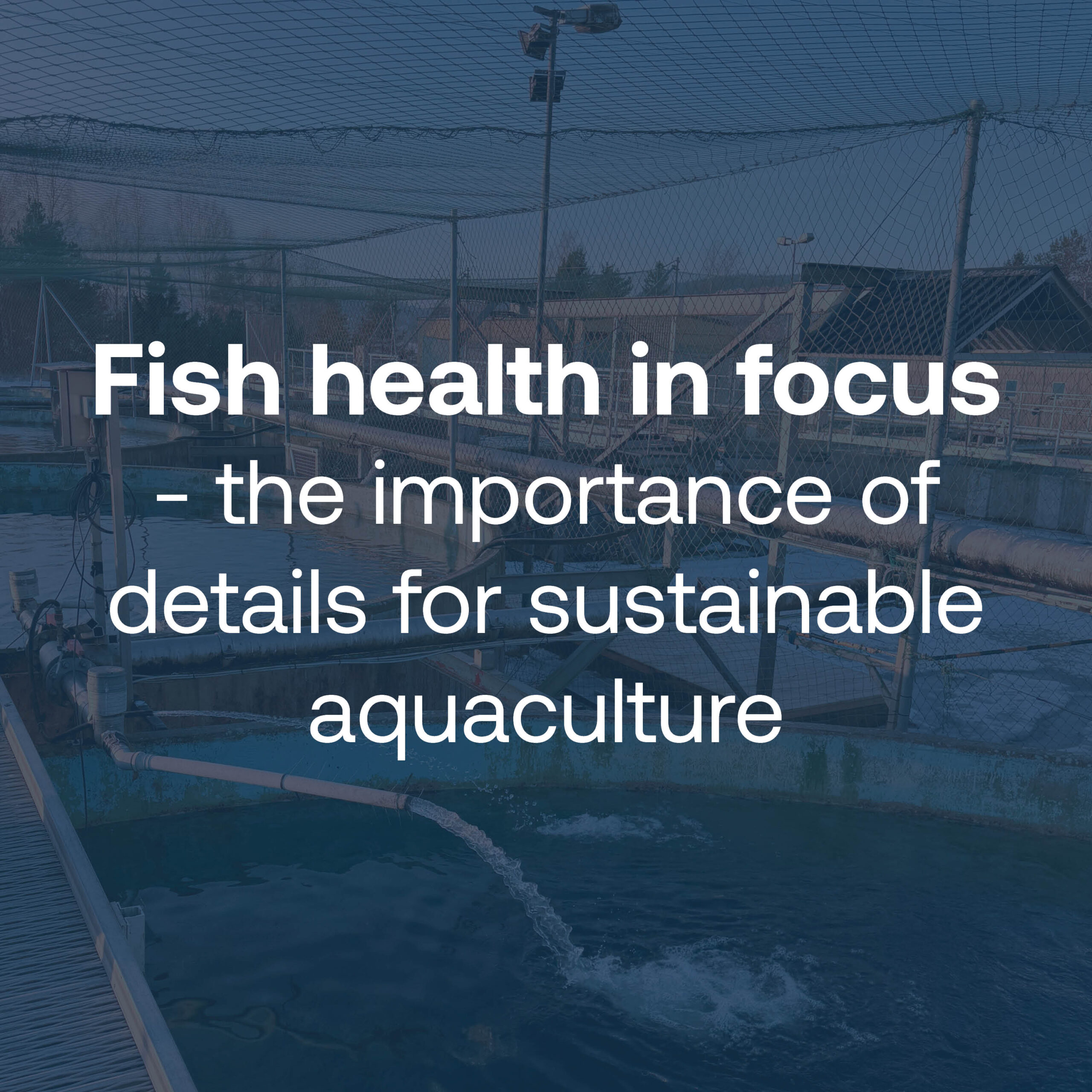
It is still dark outside at Söråkers Manor. Snow sparkles on the ground outside, and inside the conference hall the murmur of voices is slowly growing. Aquaculture practitioners, researchers, and representatives from authorities have traveled here from all over the country to spend several days delving into a topic that is crucial for the future of sustainable aquaculture: fish health and welfare.
Among the workshop participants are members of the operations team from the BalticWaters Fish Laboratory – Mats, Teddy, and Nathalie, together with Ellen, project manager for ReCod. They are here to exchange ideas and knowledge about what happens during the very earliest stages of a fish’s life — from spawning to the period as newly hatched larvae. These are precisely the stages that require the greatest care, and where small differences can have major impacts.

– The workshop combines lectures with discussions and the exchange of experiences. One particularly rewarding discussion focused on how fish respond to stress and what can be done to create better environments in the tanks, says Mats, Operations Manager at the BalticWaters Fish Laboratory.
In addition to stress, participants also discussed advances in animal welfare and methods for detecting early signs of disease.
“For us within the ReCod project, healthy fish are absolutely essential. If the fish are sick, spawning is negatively affected, or may not occur at all,” says Ellen.

It is clear that everyone shares the same interest: How can we become better at creating stable and safe conditions for fish? How can new knowledge be used to optimize both animal welfare and sustainability? It is the details that make the difference — and that is precisely why these days are so valuable.
– These days have provided practical insights that we will bring back to the laboratory, including how to handle sick fry in a gentle manner, says Teddy.
Nathalie agrees.
– Exactly. For us as operations technicians, it is important to stay up to date with the latest developments in aquaculture and fish health, so that we can support the research activities at the laboratory in the best possible way, she says.
With new insights in hand and a deeper understanding of fish health and welfare, we now continue to develop the work at the laboratory.

About BalticWaters Fish Laboratory
To create conditions for new research on Baltic Sea fish, support restocking of endangered fish species, development of aquaculture and knowledge building, BalticWaters is establishing a new fish research laboratory – the first of its kind in the Baltic Sea region. The laboratory is being built in Studsvik Tech Park outside Nyköping and is open to researchers and organizations from around the world who want to work with cold-water fish such as cod, herring and turbot in the Baltic Sea. BalticWaters is investing a total of SEK 150 million. Axfood is a long-term partner and contributes to the operation of the fish research laboratory, advice, contacts and knowledge.
Read more about the laboratory on the project page.