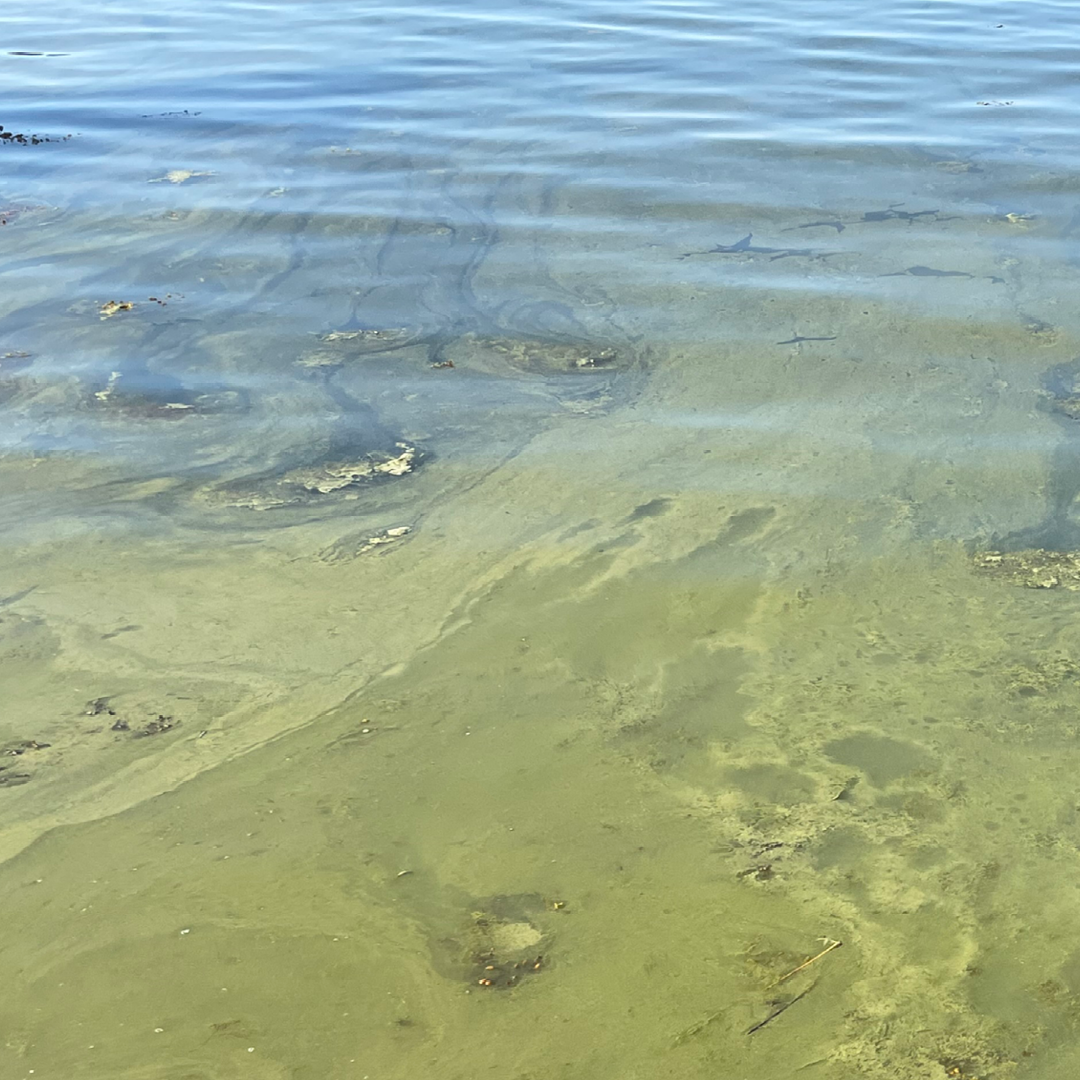
BalticWaters has been funding research for a living Baltic Sea since 2022. One of the first projects to receive support was Monitoring water quality to increase knowledge. Now that the project has been completed, we meet researcher Magdalena Bieroza again to hear more about the results, and what they may mean for future measures against eutrophication.
Agriculture is the single largest source of eutrophication in the Baltic Sea. One of the problems concerns the handling of manure, where there is a risk of nutrients leaking into the sea. This drives eutrophication in the inland sea, but also means a loss of valuable nutrients for farmers.
In recent decades, extensive measures have been implemented to reduce nutrient leakage from agriculture. And the work has yielded results: nutrient inputs have been curtailed in many places and the negative trend has been reversed. But the challenges are far from solved. Knowledge about the effect of individual measures is limited, especially when nutrient flows are expected to change as a result of climate change.
– In Sweden, we have been working on water conservation measures for 40 years, but we still don’t know if and how these efforts are leading to any significant improvements in water quality,”says Magdalena Bieroza, senior lecturer at the Department of Soil and Environment at SLU.
To understand what really works, Magdalena and her colleagues at the Swedish University of Agricultural Sciences decided to investigate the factors that determine the effectiveness of different measures, and how they can best be implemented to help reduce eutrophication.
Structure Liming, Constructed Wetlands, and Two-stage Ditches
The researchers focused on three common measures for reducing nutrient leaching: structural liming, wetlands, and two-stage ditches (see fact box). In close collaboration with local farmers, studies were conducted in two areas: Hestadbäcken in Östergötland and Tullstorpsån in Skåne.
– These measures are popular among farmers, and we wanted to look at things that are actually used in practice, says Magdalena Bieroza.
The two areas are representative of Swedish agricultural conditions in terms of agricultural production, soil type, and climate. At the same time, an unusually large number of measures are already in place.
– This makes them perfect for investigating both how individual measures affect water quality and how their effects interact on a larger scale, as well as the extent required to bring about noticeable improvements, explains Magdalena.
Structural liming:
Clay soils are often compact, which means that water and nutrients easily run off. When the soil is treated with structural lime, it becomes more porous and can better bind phosphorus. The result is reduced nutrient leaching and improved soil health.
Wetlands:
Wetlands slow down the flow of water through the landscape, reducing both the risk of flooding and the leaching of nitrogen and phosphorus from agricultural land into lakes and the sea. At the same time, nutrients are bound in the vegetation, and wetlands contribute to biodiversity by creating habitats for plants and animals.
Two-stage ditches:
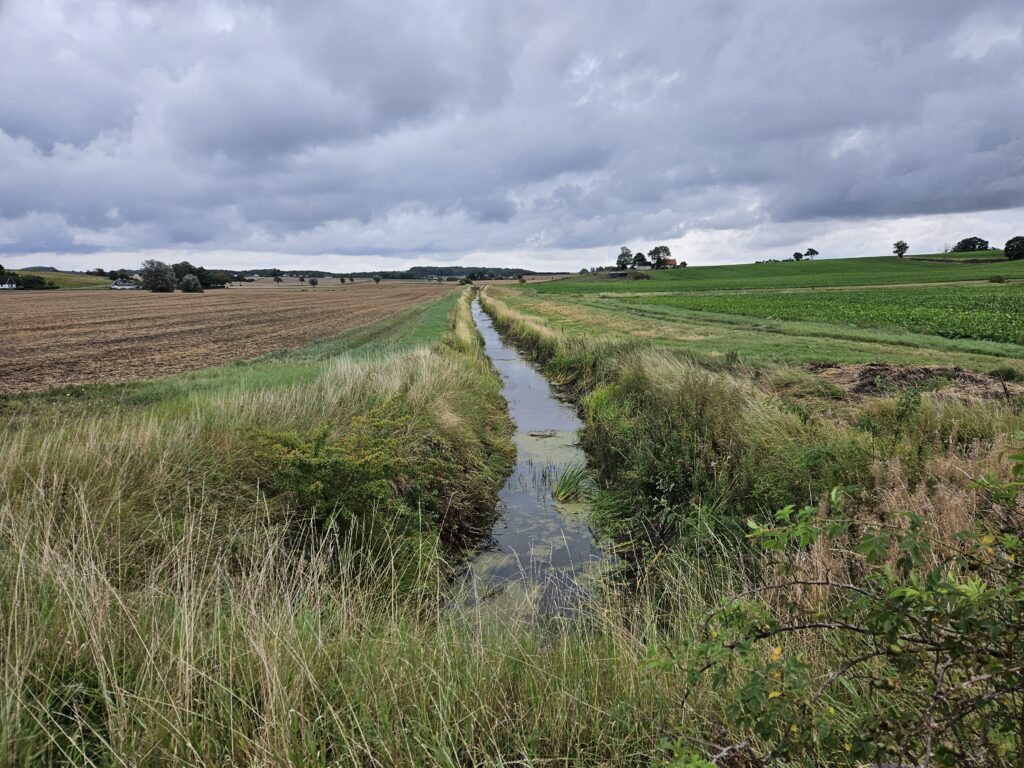
Two-stage ditches improve the drainage of fields while slowing down the transport of nutrients and reducing erosion. They consist of a central channel surrounded by higher, vegetated terraces. During normal flows, the water runs in the central channel, and during higher flows, it rises onto the terraces where vegetation captures nutrients and nitrogen is released into the air. Both the central channel and the terraces serve as habitats for plants and animals, while reducing nutrient leaching from agricultural land.
Read more about measures to reduce nutrient leaching from agriculture here.
Modeling Nutrient Flows – Today and in a Future Climate
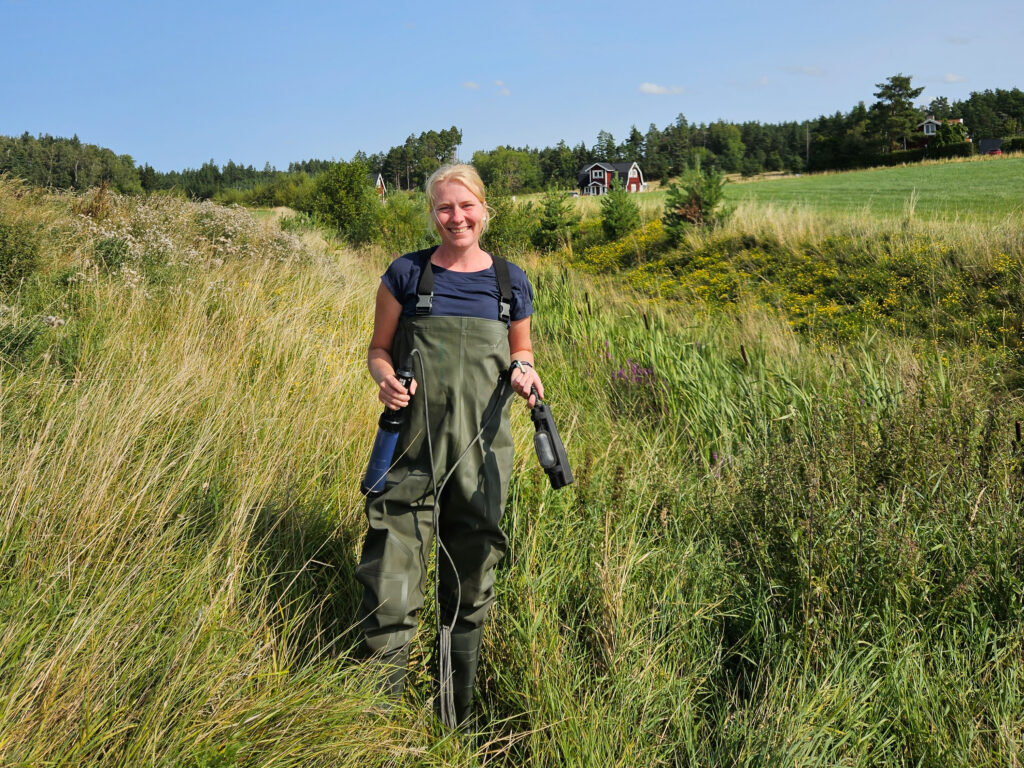
The researchers carried out high-frequency water quality measurements – an expensive but highly effective method in which sensors continuously record levels of nitrogen, phosphorus, and particles, while also collecting information about water flows. These detailed measurements were then combined with long-term water quality data, collected every two weeks over several decades.
The results from all measurements were used to build models of the two areas showing how soil and climate affect water and nutrient leakage. Using the models and supplementary field measurements, the researchers were able to identify the most important sources of nutrient leaching and track how nutrients move through the waterways. The models were also used to simulate future climate change and predict how water flows and nutrient leaching may be affected.
Nutrient Leakage Increases During Extreme Weather Events
The researchers’ findings showed that nutrient leakage from agricultural land into watercourses will increase in the future as a result of more frequent extreme weather events. Both floods and droughts will become more common as a result of climate change, which will affect both water flows and nutrient transport.
– The combination will be particularly problematic. During dry periods, nutrients build up in the soil, and when the rain finally comes, large amounts of water flow into watercourses. The longer the drought lasts, the greater the discharges and the effects on water quality, says Magdalena.
The result is a landscape where water flows and nutrients behave in a completely new way. The efforts being made today are valuable, but in order to meet the climate challenges of the future, measures on a much larger scale than today are needed, according to Magdalena.
A Chain of Measures Is Needed – from Land to Sea
So how can we best plan and implement measures to reduce nutrient leaching? The researchers’ findings show that measures rarely result in any noticeable improvement in water quality if they are spread randomly across the landscape. Future efforts therefore need to cover the entire route from field to sea – an approach that is often lacking today.
– Farmers know their land best and should continue to make decisions about initiatives. But in order for the measures to have the greatest possible effect, we propose a more strategic approach. We need to look at larger areas and create a chain of measures that capture nutrient losses at every step, explains Magdalena.
Magdalena emphasizes that the authorities have a crucial role to play: to provide equal support for different measures and not just focus on the most popular or convenient options.
– A strategic, holistic approach is absolutely crucial to reducing eutrophication in the Baltic Sea, she says.

About the project
The project Long-term and high-frequency water quality monitoring for improved evaluation of the effects of measures and climate change was carried out by the Department of Soil and Environment, SLU, and ran until 2025. Through BalticWaters’ program for research projects and pre-studies, the project was awarded a grant of SEK 1,000,000 for the scientific part of the project.
Want to know more?
We also interviewed Magdalena Bieroza when the project began in 2023. In the article “New technology for cleaner waterways,” you can read more about the methods used in the project.