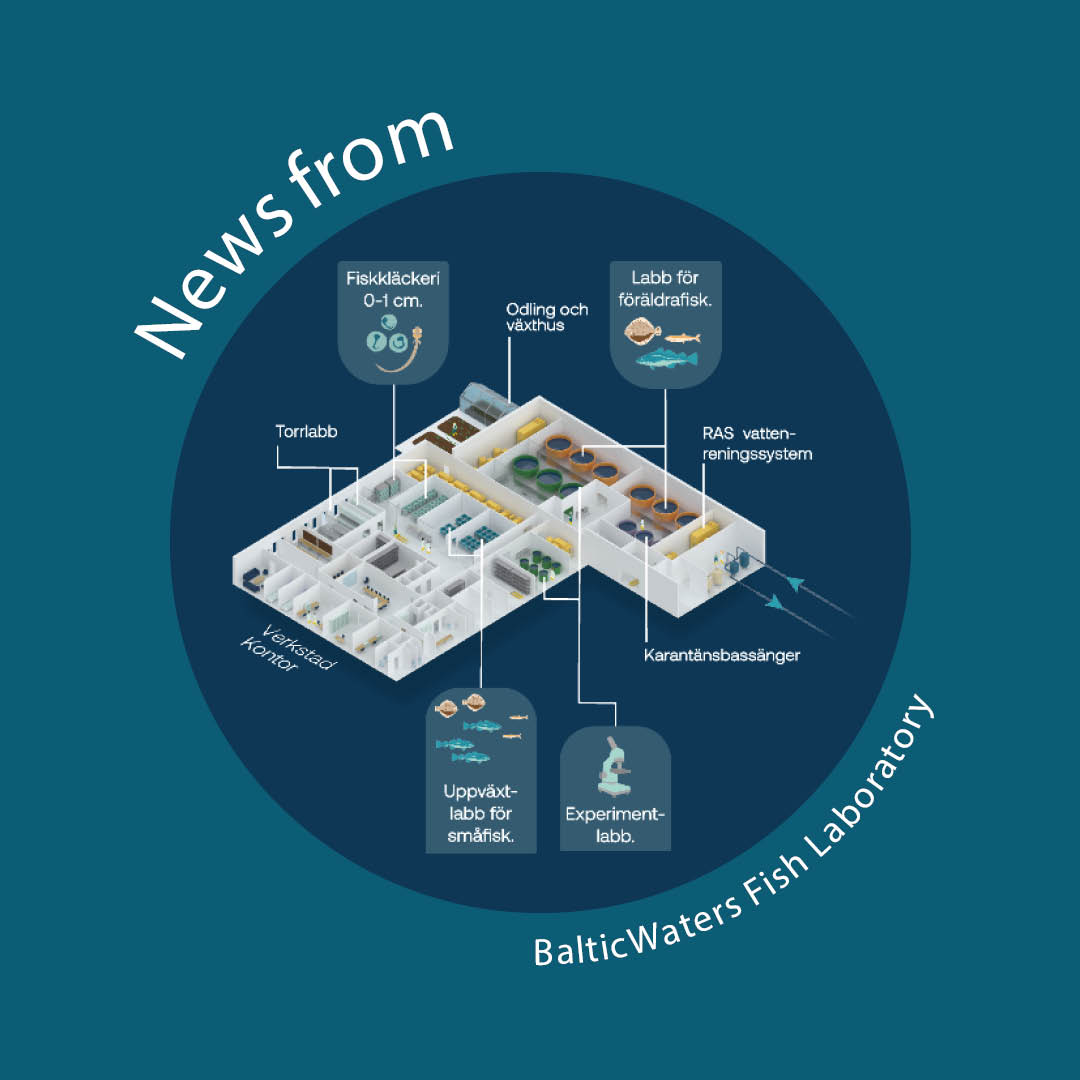
There is something special about the sea. For many, it is a place for recovery, for others, a driving force to want to make a difference. For Johnnie Stjernberg and Hiba Jasmin, their commitment to the sea has now led them to the BalticWaters Fish Laboratory, where, in their new roles, they are strengthening two important projects for the future of the Baltic Sea.
It was during a nature conservation programme that Johnnie realised he wanted to work with preserving and restoring nature, with a particular focus on the marine environment.
– My interest in the Baltic Sea has always been there. My interest in fish – and perhaps above all trout and the debate around migration barriers – grew during my years at university, he explains.
Johnnie will now work as an animal caretaker within the ReCod project. His main responsibilities will be caring for fish at all stages of life, taking care of fertilized eggs and rearing larvae, as well as assisting with the release of juvenile cod into the Baltic Sea.
– The purpose of the project was what attracted me most to applying for the position. Cod is of great importance both for the marine ecosystem and for us as humans. Being able to contribute to this important work feels both challenging and fun, says Johnnie, who has moved from Arvika to Nyköping for the job.
Hiba is a research assistant in the CLUPEA research project, so for her the focus will instead be entirely on herring. Like Johnnie, she will work with fish at all life stages, but she will also collect samples for genetic mapping. The research group aims to, among other things, identify which genes control important traits such as salinity tolerance, temperature adaptation, spawning period and visual ability.
Working with fish is nothing new for Hiba.
– I have always been a ‘fish person’. The interest goes all the way back to my childhood, when I used to go to streams and catch fish to observe and feed them, she says while remembering her upbringing in Kerala, India.
Before starting at BalticWaters, Hiba, through her studies and internships, had the opportunity to visit several aquaculture facilities around the world. Most recently, she was an intern at the University of Gothenburg, where she worked, among other things, on rearing lampreys. Now she is facing new challenges.
– When I came to Sweden, I heard about the Baltic Sea and the problems the sea is facing. I was shocked but also fascinated by the fact that marine species have learned to adapt to the Baltic Sea’s unique environment, she says.
Hiba is particularly fascinated by the herring’s remarkable ability to adapt.
– Herring is one and the same species, but there are several different stocks in the Baltic Sea. What genetically distinguishes these stocks, and how healthy, resilient stocks can be built, is something I really look forward to exploring in more detail, she says.
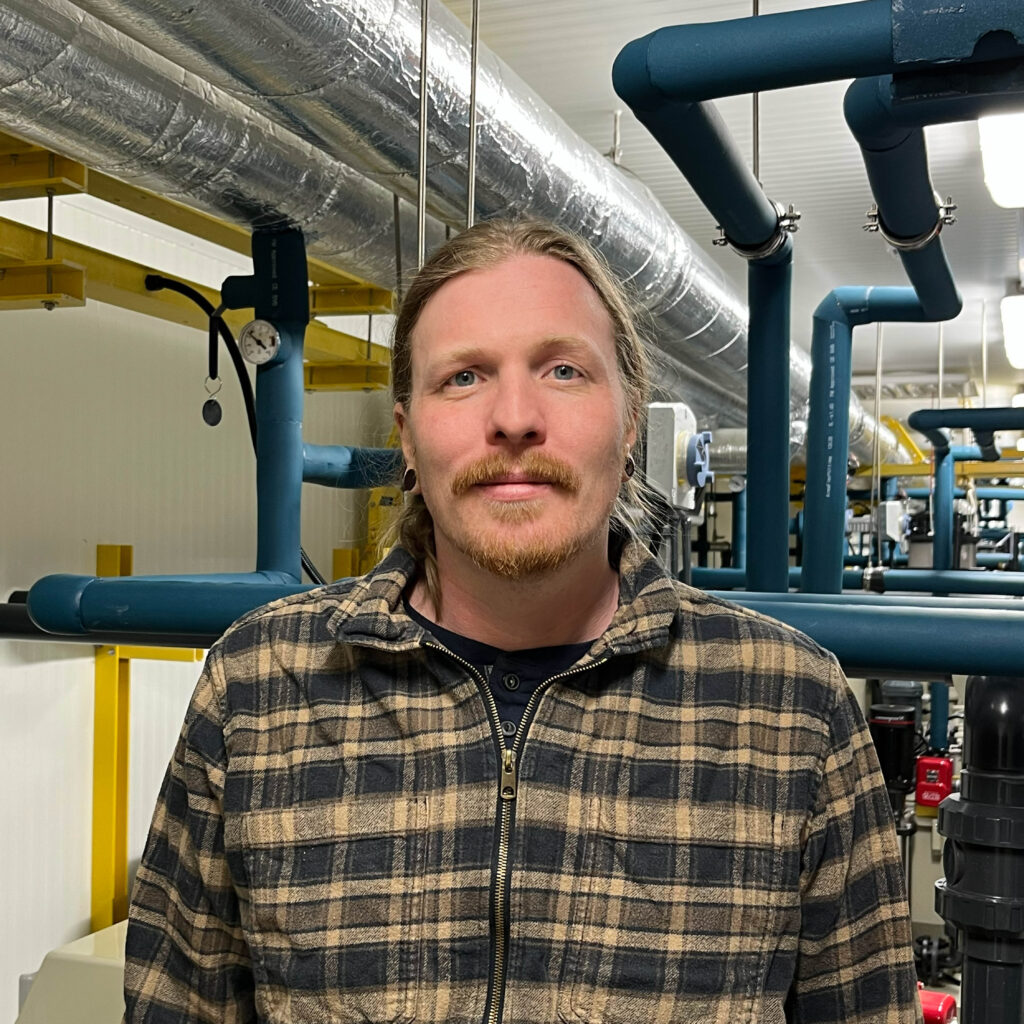
Five quick questions
Name: Johnnie Stjernberg
Education: Bachelor’s degree in Environment and Safety and a started master’s programme in Sustainable Forestry.
Previous job: Installer at ABB
Favorite species in the Baltic Sea: Seals are always nice to see. And the three-spined stickleback is interesting.
The first thing I will do in my new role: Take courses in fish and ethics and plan for the arrival of the fish.
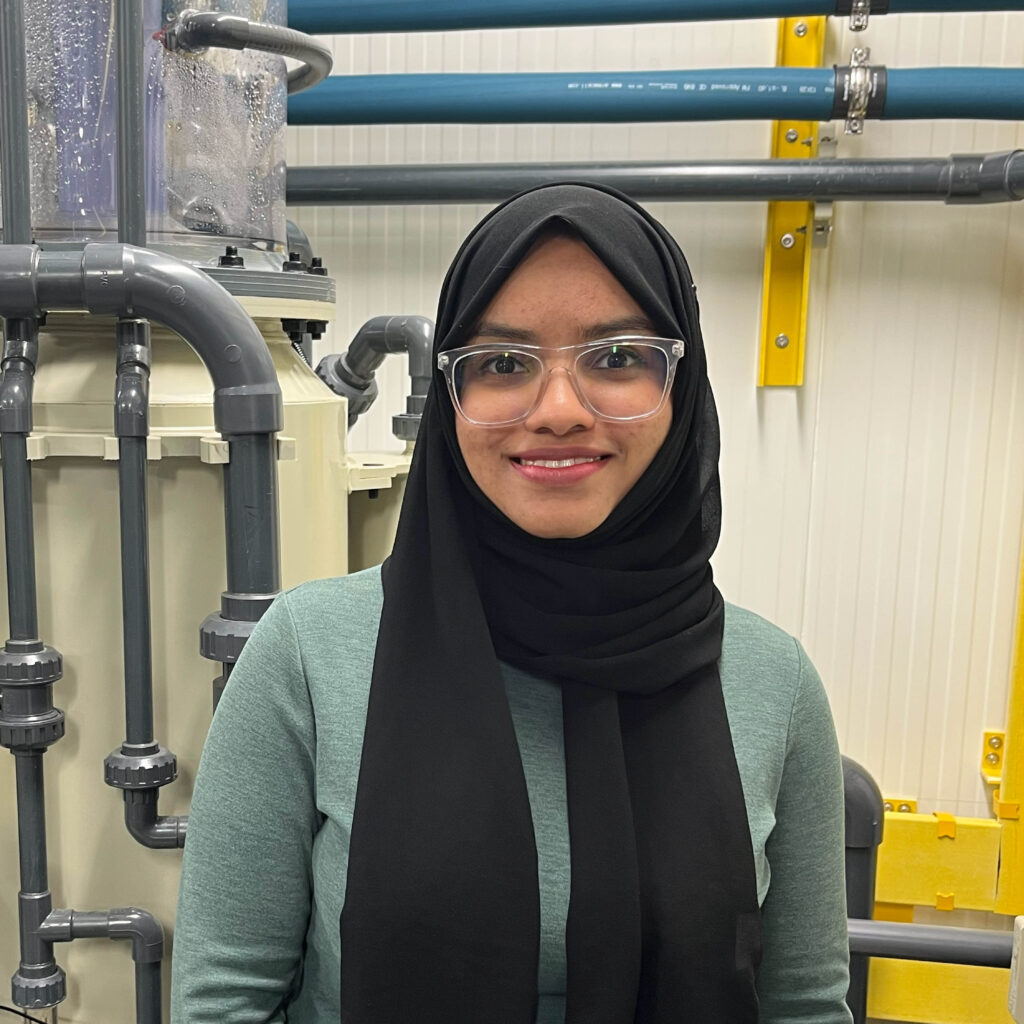
Five quick questions
Name: Hiba Jasmin
Education: Bachelor´s degree in Fisheries Science (India), EMJM degree in Aquaculture, Environment and Society (Scotland, Greece and France)
Previous job: Intern at Gothenburg university
Favorite species in the Baltic Sea: Blue mussels, especially the gills as they move in such a sophisticated way.
The first thing I will do in my new role: Carry out in vitro fertilization to test hatching and rearing healthy, resilient herringstocks.
We look forward to following Johnnie, Hiba and the projects’ work at the laboratory going forward!

Would you like to learn more about the laboratory’s capacity and
opportunities for collaboration? Read more here or contact Frida Tornberg at frida.tornberg@balticwaters.org
The CLUPEA project, funded by the Knut and Alice Wallenberg Foundation, involves collaboration between Uppsala University and BalticWaters.
From 2025, ReCod – release of small cod in the Baltic Sea will be run at BalticWater’s new fish research laboratory in Studsvik, outside Nyköping.