Fish in the Baltic Sea are not only an environmental issue – they represent an underused resource for jobs, value creation and national preparedness. In a new report, Cecilia Solér shows how a transition from large‑scale fishing for feed production to fisheries for food production can unlock economic value worth billions. The findings confirm the conclusions of earlier analyses by Stefan Fölster: the current model is costly to society, while sound management can make recovery economically profitable. This brief summarises the key findings and outlines the policy actions needed now.
New report: The future of fisheries for food production – a 10‑year perspective on socio‑economic growth
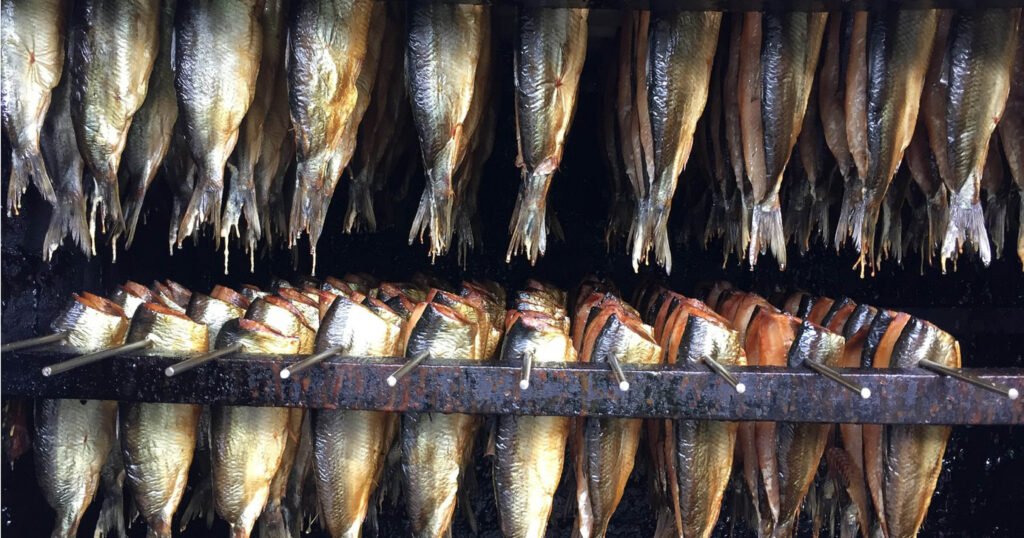
Commissioned by BalticWaters, Cecilia Solér, Associate Professor and Senior Lecturer at the School of Business, Economics and Law at the University of Gothenburg, has published a new report presenting updated calculations and outlining the potential socio‑economic value of Swedish Baltic Sea fisheries. Today, fisheries are heavily oriented towards industrial fishing for animal feed, with the majority of herring landed abroad, including in Denmark. This means that value added is created outside Sweden, resulting in lost socio‑economic gains for the country. The difference in value creation is substantial. When herring is used for animal feed, it generates approximately SEK 4 per kilogram in added value, whereas the same fish can generate between SEK 130 and 360 per kilogram when processed as food in Sweden.
This presupposes the existence of healthy fish stocks and sufficiently large fish to enable commercially viable food fisheries.
A transition from feed fisheries carried out abroad to food production in Sweden could have significant impacts on several Swedish coastal communities. Today, a large share of the value from Swedish catches is created abroad, while reception and processing capacity along the east coast is severely limited. To handle large volumes of fish for food production in Sweden, investments of approximately SEK 500 million are needed in new ports and facilities for landing and processing. Such investments would create new jobs throughout the value chain and contribute to regional development in coastal communities such as Oxelösund, Västervik, Karlskrona, Norrsundet or Slite. Estimates show that these investments could create around 150 new jobs.
By steering a larger share of fisheries towards human consumption and ensuring that catches are landed and processed in Sweden, fisheries can become a concrete tool for strengthening Sweden’s national preparedness. Such an approach not only increases self‑sufficiency but also helps build robust structures throughout the entire food supply chain.
– A transition in which 60 per cent of Sweden’s herring quota is used for human consumption could increase value creation by up to SEK 3 billion per year already today.
– In the longer term, with recovered fish stocks, the potential is estimated at up to SEK 19 billion annually.
– Investments in processing capacity along the east coast can create jobs, strengthen regional development, and contribute to increased food preparedness.
Source: The Future of Fisheries for Food Production, Solér (2026)
International experience – lessons from Finland and Sweden
Stefan Fölster has previously analysed Baltic Sea fisheries both in his report on international best practices and in this spring’s report on Finnish fisheries. Both point to a fundamental problem in the current fisheries model. The large‑scale trawl fisheries that dominate catches generate low value added, as a significant share of the fish is used for fishmeal and animal feed. When calculating the socio‑economic value of industrial fishing, Fölster estimates a net loss of nearly EUR 5 million per year once subsidies, tax exemptions and environmental costs are taken into account. This type of fishing also contributes to weakened fish stocks, putting future catches and economic value at risk.
At the same time, both reports show that the potential of the Baltic Sea is substantial. International examples—from the Gulf of Riga to the North Sea and Iceland—demonstrate that fish stocks can recover rapidly when fishing pressure is reduced and management is strengthened. Fölster’s scenarios indicate that such a transition in the Baltic Sea could generate significant socio‑economic gains.
With current fishing practices
Finland: – SEK 60 million per year in socio‑economic losses from today’s large‑scale fishing
Sweden: – SEK 205 million per year in socio‑economic losses
With a transition in fisheries management
Potential (Finland): + SEK 290 million per year in socio‑economic gains following a transition
Potential (Sweden): + SEK 260 million per year in socio‑economic gains following a transition
Source: The Path Choices of Finnish Fisheries, Fölster (2026); International Best Practices Show the Way to Sustainable Fish Stocks in the Baltic Sea, Fölster (2025)
Preparedness quotas – more robust management and a buffer in an uncertain world
One possible measure is the introduction of so‑called preparedness quotas in Sweden, whereby a portion of the annual allowable catch is left in the sea. This creates a buffer that can be used in the event of disruptions to food supply, while also contributing to faster recovery of fish stocks. Over time, this approach can support a more profitable and sustainable fisheries sector.
What does Sweden need to do?
All reports point to a clear conclusion: today’s fisheries policy in the Baltic Sea results in low economic value, weakened fish stocks and reduced food preparedness.
At the same time, the potential is substantial. With a new direction that prioritises food production and allows fish stocks to recover, Sweden can:
- create significant economic value
- strengthen coastal communities and employment
- increase protein self‑sufficiency
- build robust national food preparedness
However, this requires clear political priorities and a more active fisheries policy in the Baltic Sea.
Policy proposals from BalticWaters
- Sweden needs political decisions to reform fisheries policy so that a larger share of quotas is allocated to food production.
- Reform the quota system to prioritise coastal fisheries over industrial fishing.
- Permanently extend the trawl‑free zone to protect coastal fish stocks and create new conditions for recreational fisheries.
- Introduce preparedness quotas to strengthen food supply and domestic protein production in times of crisis and war.
- Invest in landing and processing capacity along the east coast to create jobs and support resilient, thriving coastal communities.

The brief in short
A new fisheries policy can strengthen the economy, the environment, and national preparedness.
Current fishing practices generate low value and can be socio‑economically negative.
Redirecting fish from animal feed to food production can dramatically increase value creation.