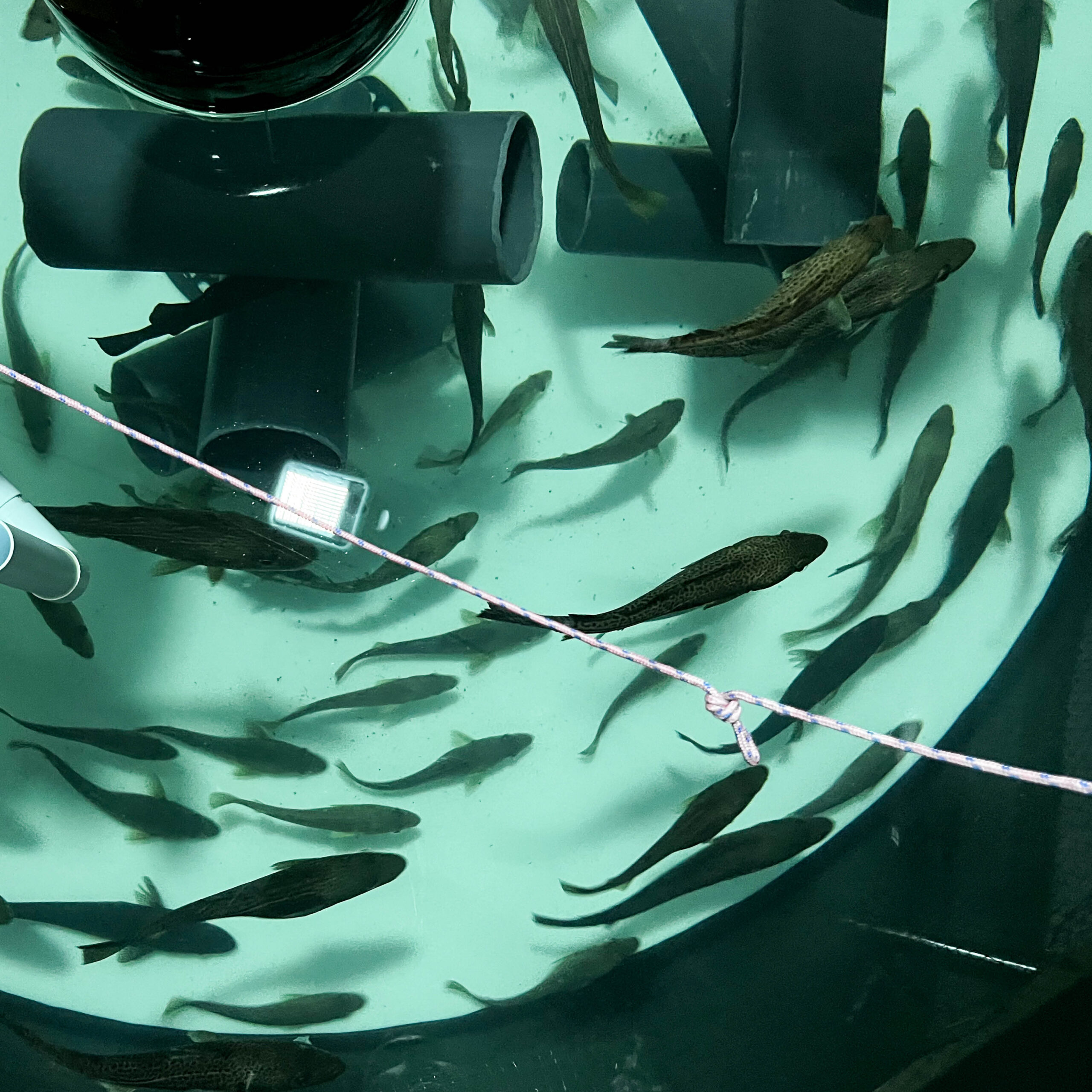
The cods in the project ReCod – release of small cod in the Baltic Sea – have now been staying at BalticWaters Fish Laboratory for over two months. During this time, they have adapted well to their new environment. They swim calmly and curiously in the tanks and show a healthy appetite, which are clear signs that they are doing well.
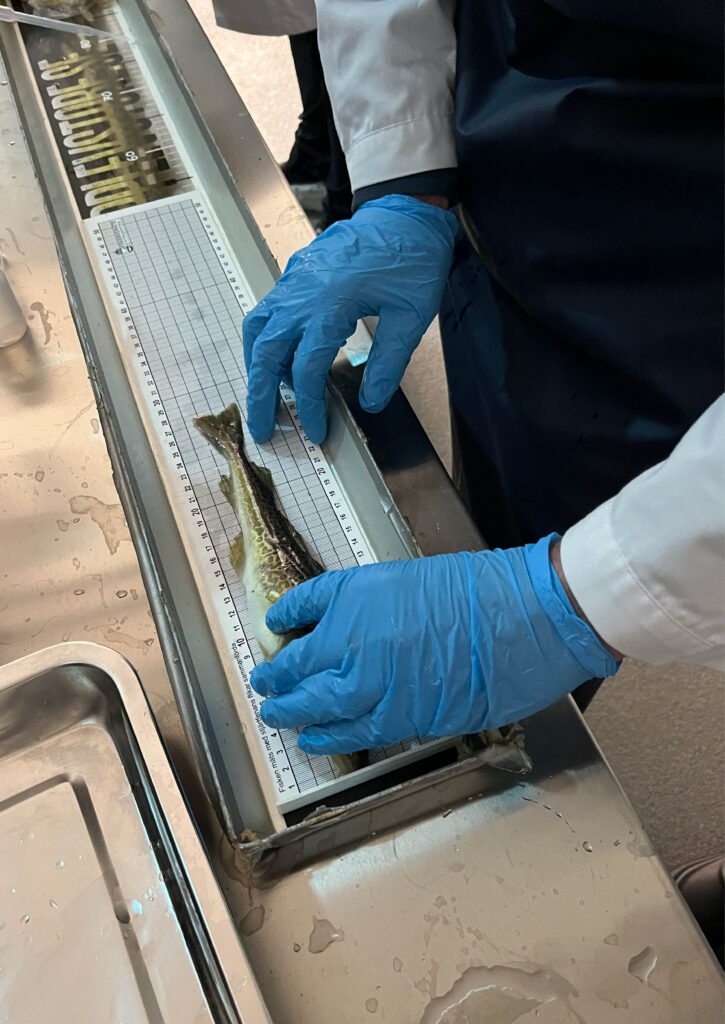
In preparation for the anticipated natural spawning, which is expected to take place later this spring, work is currently underway to weigh, measure and tag each individual cod. The aim is to identify each fish, determine its sex, and monitor growth throughout its time at the Fish Laboratory.
– We also plan to take DNA samples. The purpose is to determine which cod stock the fish belongs to. Now it is uncertain whether the cod, which comes from the depths of Bornholm, only belong to the eastern stock or whether there are also individuals from the western stock, says Vincent Néron, project manager for ReCod.
The DNA samples will not only help identify the origin of the fish in ReCod but will also provide valuable information for future surveys and long-term monitoring of the project.
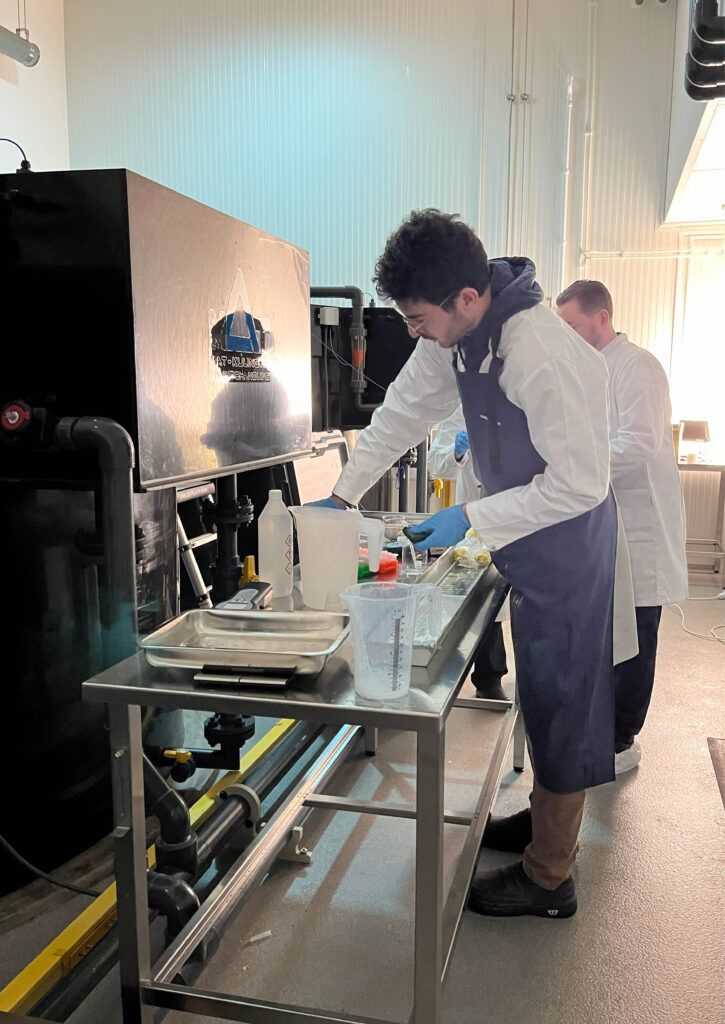
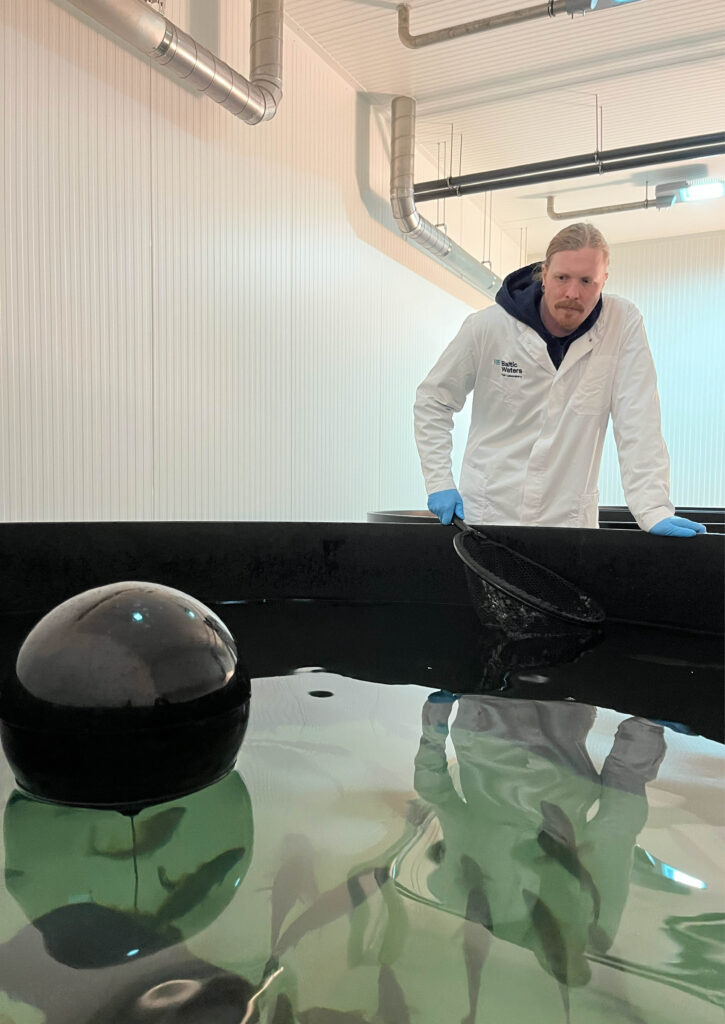
Weighing, measuring and tagging around 150 cod requires careful planning. Everything is therefore prepared in advance. Fish welfare is always the top priority, and the procedure must be carried out quickly. The entire procedure must not exceed 60 seconds before the fish is returned to the water.
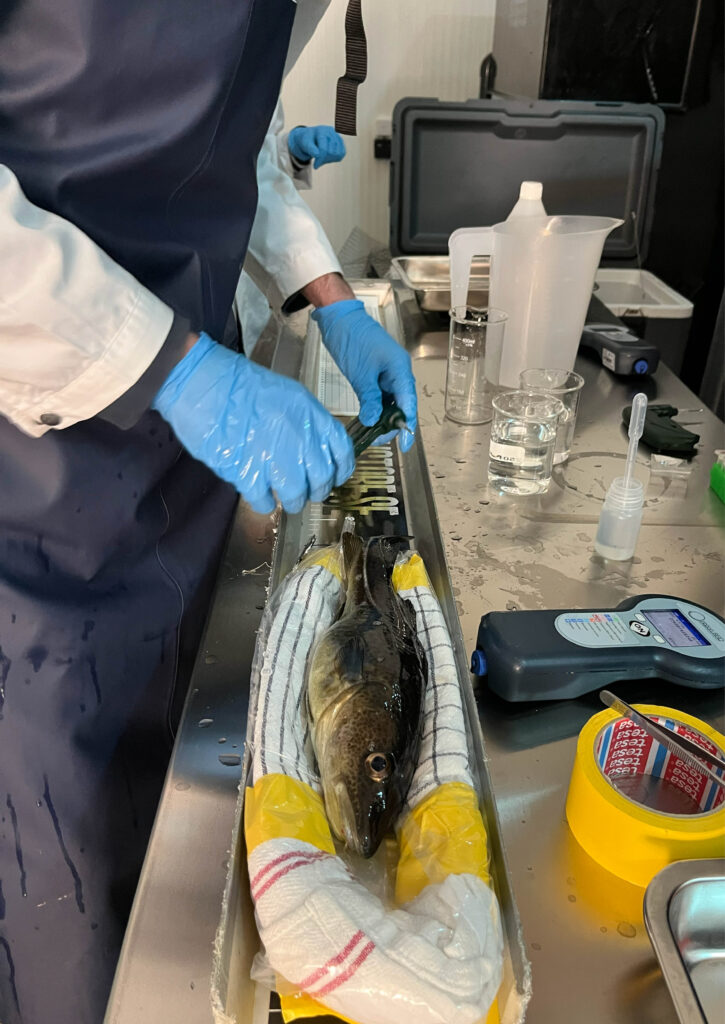
With steady hands, this is no problem for Vincent or animal caretaker Johnnie Stjernberg. Calmly and methodically, one cod at a time is gently netted and placed in a benzocaine bath, which temporarily sedates the fish. Light sedation makes the procedures both more efficient and less stressful for the animal.
Once the fish is sedated, it is first weighed and measured.
– Both length and weight vary between the cods. The largest cod measures 41 cm and weighs 734 grams, while the smallest is 25 cm long and weighs 98 grams, Johnnie explains.
– And most of them are in good condition, with healthy scales, Johnnie adds, as he and Vincent prepare to tag one of the cod.
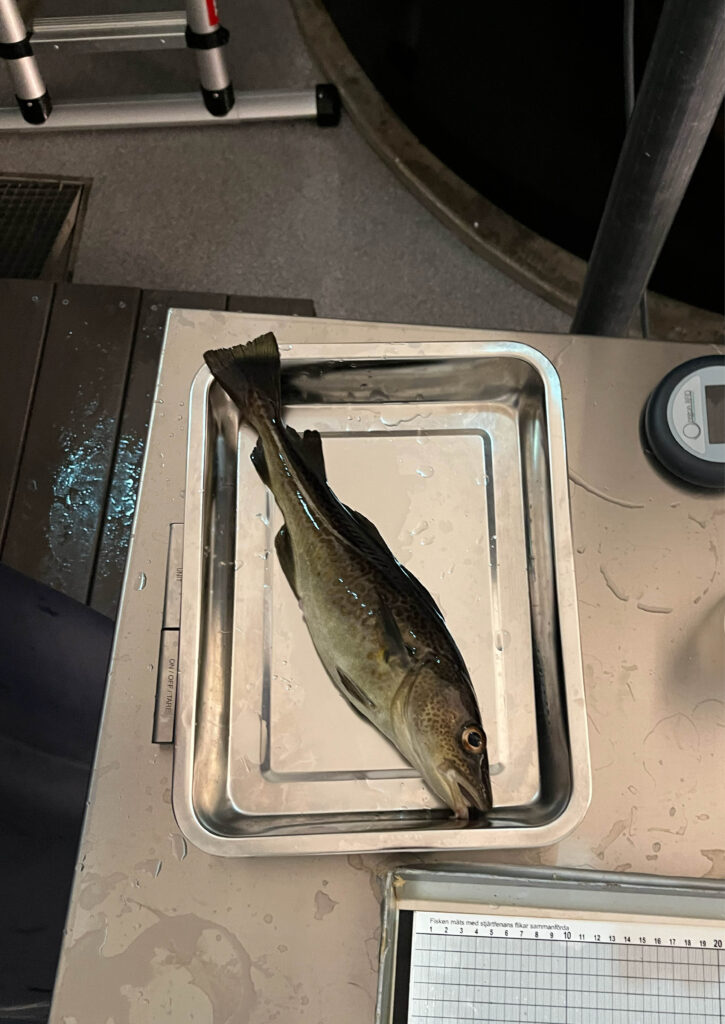
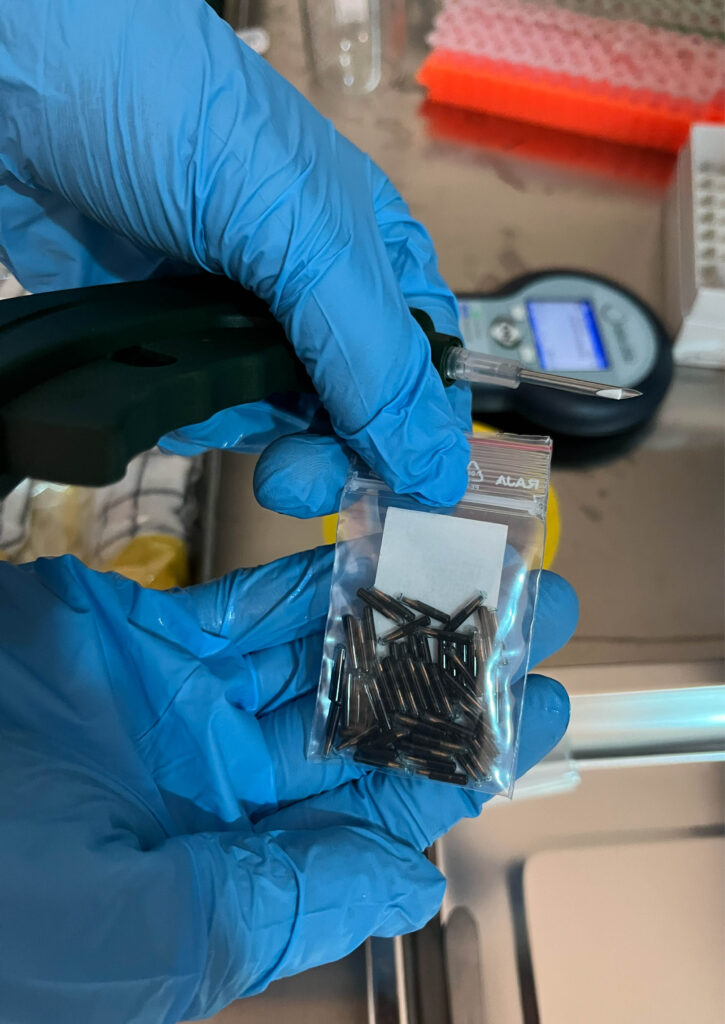
To enable individual tracking, each cod is given a unique tag. A small device known as a PIT tag (Passive Integrated Transponder) is carefully inserted into the muscle just behind the dorsal fin. The tag serves as an electronic identity, is easy to scan, and remains securely in place. Finally, a DNA sample is taken from the cod’s anal fin before the fish is returned to the tank.
Now a calmer period awaits the cod, who can continue to eat and grow. For the project team, the wait begins for what could be the start for the next generation of Baltic cod.
– We have already observed signs of mating behaviors, so our focus now is on preparing the hatchery and making sure everything is in place for when fertilised cod eggs are – hopefully – produced, says Vincent.
For Vincent and Johnnie, it is hard to hide their excitement. The next important phase is about to begin, where the goal is to hatch cod larvae and follow their first, delicate steps toward the juvenile stage. The process is complex, but the commitment – and hope for success – is strong.

ReCod – release of small cod in the Baltic Sea – was previously carried out at the Ar research station in northern Gotland by BalticWaters and Uppsala University. For four years, the station housed Baltic cod that were allowed to spawn, resulting in cod larvae that were later released into the Baltic Sea. The next phase of ReCod — hatching cod larvae and rearing them to juvenile cod — is being carried out by BalticWaters at BalticWaters Fish Laboratory in Studsvik, outside Nyköping.