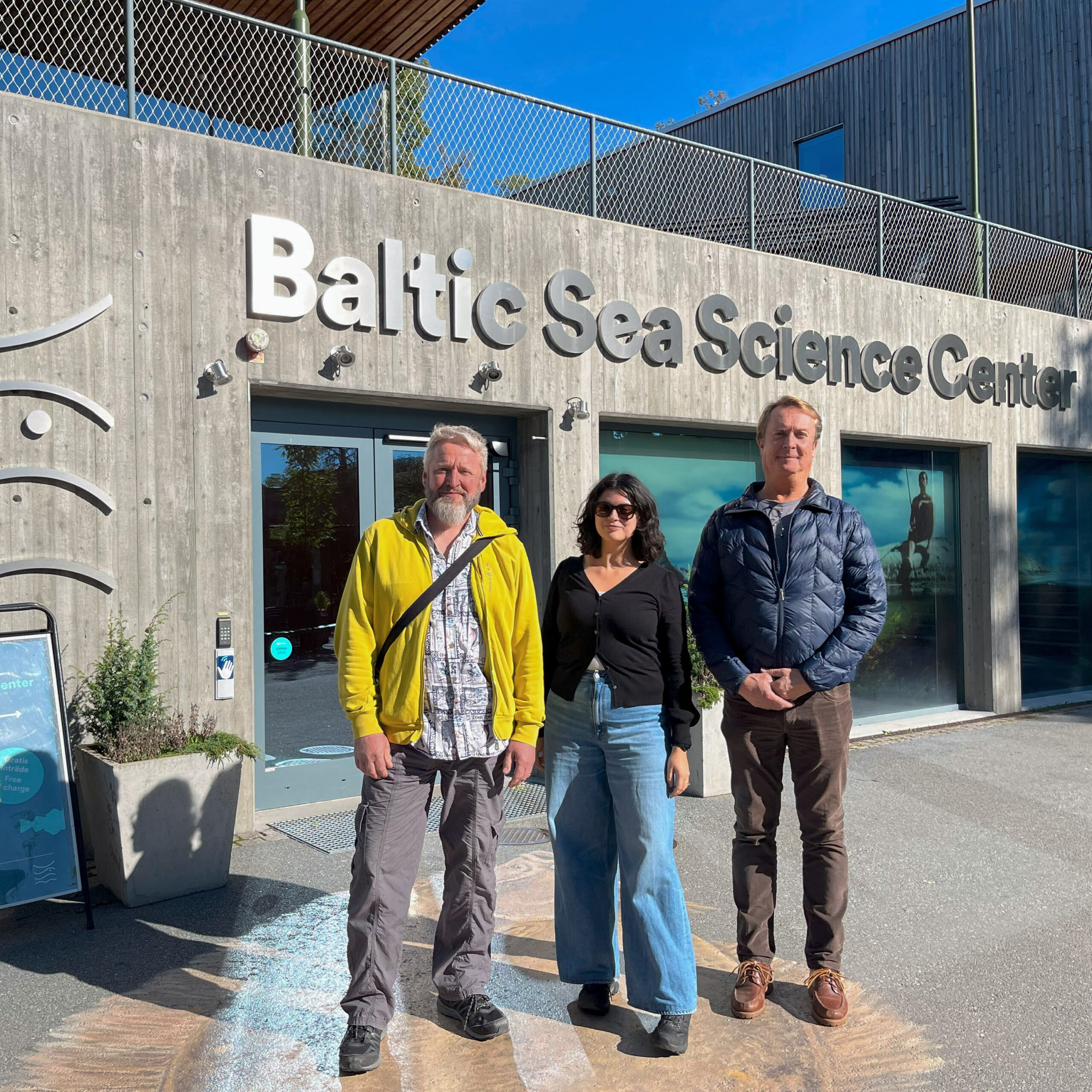
While waiting for the opportunity to start housing fish at BalticWaters’ Fish Laboratory, the operations team — Mats, Nathalie, and Teddy — is keeping busy. Today, they leave the laboratory and the bay of Tvären behind for a study visit to Skansen’s Baltic Sea Science Center (BSSC). The purpose of the visit can be summed up in one word: water purification.
Once inside the Baltic Sea Science Center, we walk through a living story about the Baltic Sea. But today, the focus isn’t on the beautiful aquariums or the shimmering fish in the exhibition hall — we’re here for the water.
Patrik Jakubowski Arnold and Emma Alsing Skog, aquarists at Skansen, take us behind the scenes and begin to show and explain how they work with fish and water purification. Patrik emphasizes that the well-being of the fish is of utmost importance — and that means the water quality is crucial.
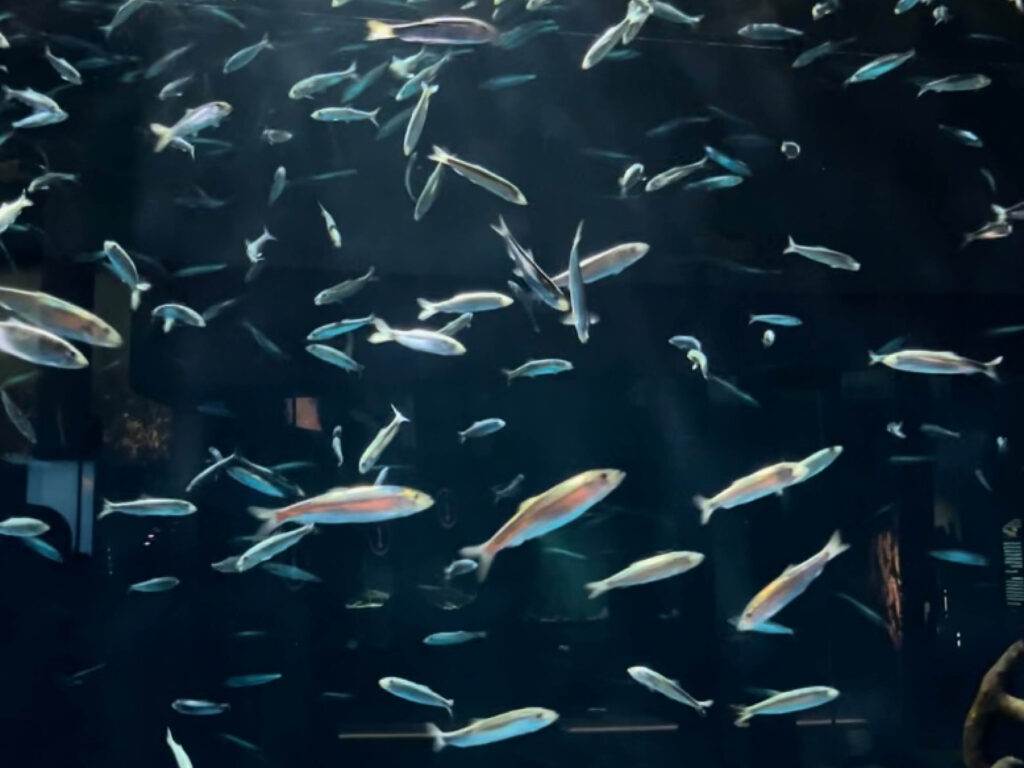
Just like at BalticWaters Fish Laboratory, Skansen uses Recirculating Aquatic Systems (RAS) to provide the fish with optimal water conditions in which to thrive. It’s easy to assume that advanced systems like these take care of themselves, but in reality, they require knowledge, daily monitoring, and careful adjustments to maintain the best possible environment for the fish. So there we stand, surrounded by humming pumps, exchanging thoughts and ideas.
– It’s sophisticated technology where many parameters must be considered to keep the water environment clean and stable. Being able to share experiences is always valuable, says Mats, operations manager at BalticWaters Fish Laboratory.
At the laboratory, the operations team will be working with several RAS units of varying sizes. But regardless of size or number, great precision and sensitivity are required to maintain clean and stable water conditions — something the Skansen aquarists clearly demonstrate throughout the day.
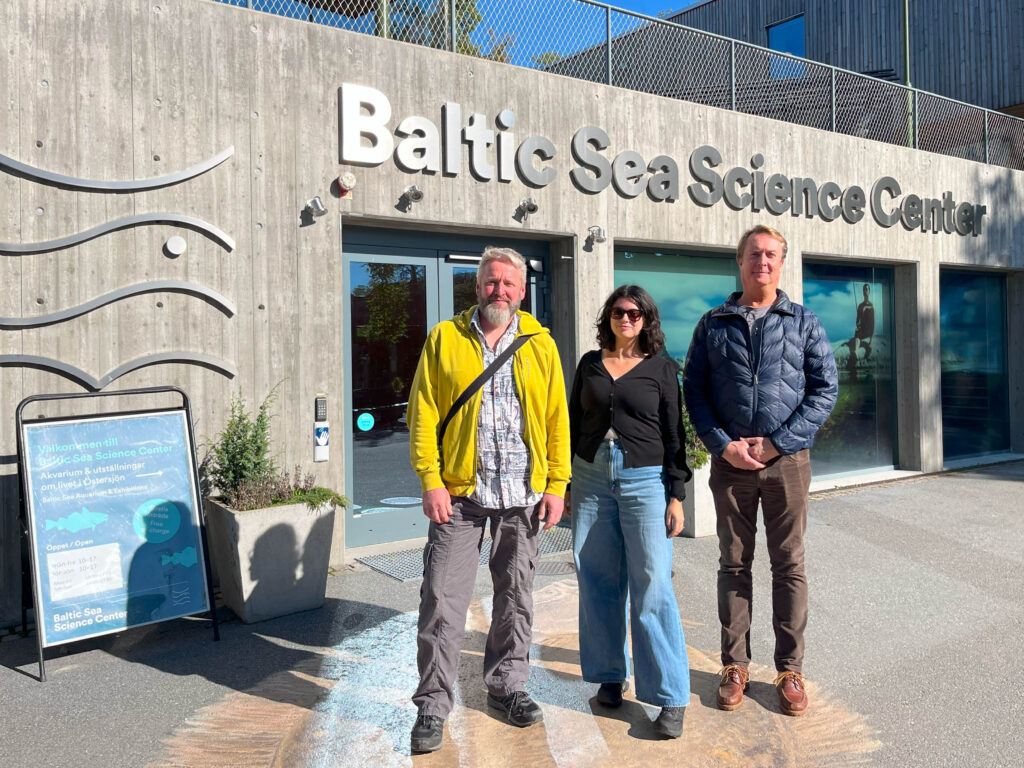
On the way back to the laboratory, the discussions continue about how to best purify water from the Tvären bay from bacteria and pollutants, and how to regulate its temperature, salinity, and oxygen levels.
– I’m especially impressed by how they constantly come up with smart solutions to adapt their systems to the fish’s needs. It gives us a lot of inspiration for our own work going forward,” says operations technician Teddy, reflecting on the aquarists’ expertise and technical ingenuity.
Construction workers are still busy finishing the laboratory, but 2026 — the first full year of operation — is approaching fast. Alongside the launch of the first research projects next year, methods and routines for managing the RAS units will also be established. Until then, the operations team stands ready — that much is certain.
– It was an inspiring day full of insights. Now I’m even more excited to finally get fish into our facility, says Nathalie with a satisfied smile.
RAS, or Recirculating Aquatic Systems, are closed, land-based systems that purify and recirculate the water in all of the laboratory’s tanks. The system uses mechanical and biological filters to remove particles, nutrients, and waste products from the water, as well as disinfection with UV and/or ozone. The laboratory has a total of 21 RAS units in different sizes; most of them clean and circulate water within the tanks, while some are used to treat the water that is taken in from and released back into the Tvären bay.

About the fish research laboratory
Goal: The laboratory is a place that enables new knowledge about cold-water fish species in the Baltic Sea, such as cod, herring, and turbot, which in turn promotes biodiversity in the Baltic Sea.
Location: Studsvik Tech Park outside Nyköping
Capacity: The building will contain laboratories that can house fish at different stages of life. There will be a total of 12 tanks for adult fish. There will be hatcheries for fish species that lay eggs on a surface (e.g., herring) and hatcheries for fish species that lay eggs in the open water (e.g., cod). In total, there will be over 70 tanks for holding eggs, larvae, and fry.
Water system: All water in the tanks and hatcheries circulates in RAS.
Commissioning: Autumn 2025
Read more about BalticWaters Fish Laboratory here.