Herring has long been an integral part of Swedish food culture. However, in recent decades, the presence of environmental toxins has raised concerns about eating the fish. The claim that Baltic herring is “too toxic to eat” is sometimes used to justify continued large-scale industrial fishing, where the fish is turned into animal feed. But how true is this really? BalticWaters sets the record straight.
Herring has long had a firm place on the dinner table – in times of celebration, as well as in times of hardship. But today we are eating less and less herring. Over the past 30 years, Swedish herring catches in the Baltic Sea have fallen by over 70 per cent, and of the fish landed, only around 10 per cent is used for food. The rest, 90 per cent, goes towards feed production.
Is there potential to change how herring is used so that a larger proportion ends up on our plates instead? Or is herring too toxic to eat, as is sometimes claimed?

Grilled herring. Photo: Ebba Rosendahl
Dietary guidelines and health risks
Just like other fatty fish from the Baltic Sea, herring contains the environmental toxins dioxin and PCBs, although levels have fallen sharply since these substances were phased out in the 1970s and 1980s. These substances are fat-soluble and can with long-term exposure affect brain development, the body’s immune system and cause cancer, amongst other things.
According to the Swedish Food Agency’s dietary guidelines, women of childbearing age, pregnant and breastfeeding women, as well as children and adolescents, should therefore not eat Baltic Sea herring more than 2–3 times a year. Other groups are advised to eat herring no more than once a week.
But how accurately do these guidelines actually reflect the real risks? To find out, we need to take a closer look at what we know about environmental toxins and their health effects.
General advice – wide variations
The Swedish dietary guidelines are based on a risk assessment in which levels of environmental toxins are compared with a tolerable weekly intake (TWI). The guidelines are general in nature for the entire Baltic Sea and make no distinction between fishing grounds or the size of the fish. Whilst this certainly makes them easy to communicate, it also means that important differences are overlooked.
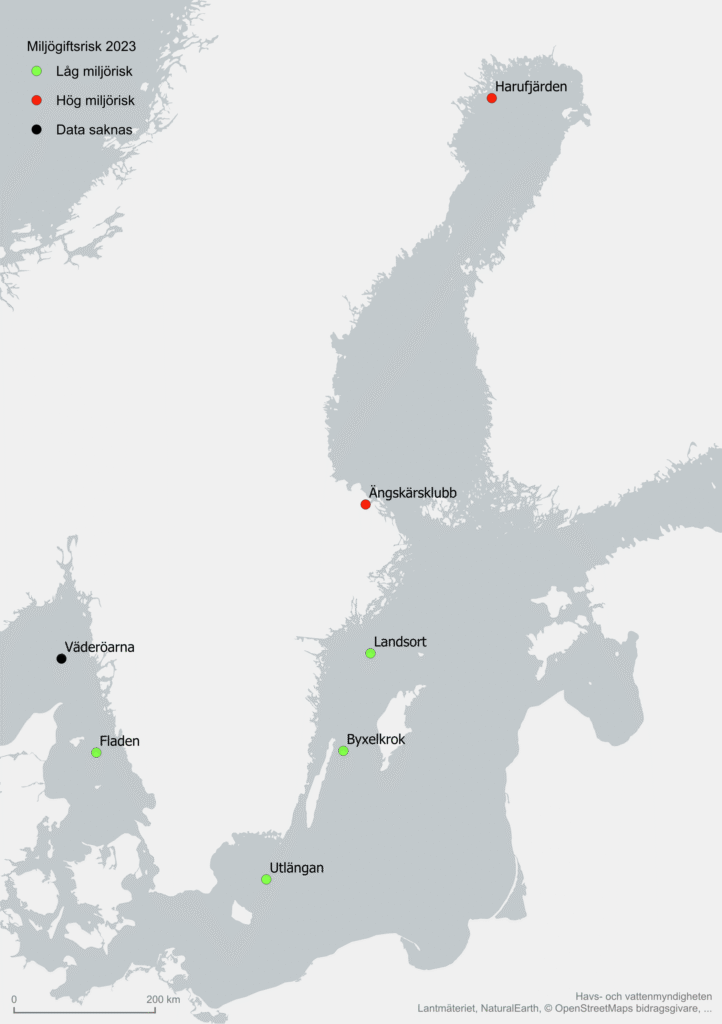
Concentrations of environmental toxins vary significantly. As dioxins and PCBs accumulate over time, larger and older fish generally contain more toxins than smaller ones. This also means that growth rate matters: the slow-growing herring in the north often has higher concentrations of environmental toxins than herring of the same size in the southern Baltic Sea, where the fish grow faster.
The differences are significant. In northern Roslagen, it is estimated that an adult can eat herring around eight times a year without exceeding the tolerable intake, whilst the corresponding figure in the Södermanland archipelago can be as high as a hundred times a year. Despite this, herring from both fishing areas are subject to the same advice. Furthermore, levels could be reduced to a third if the parts of the fish where dioxins and PCBs accumulate are removed, meaning that it is estimated people could eat at least twice as much herring compared to current assessments.
The benefits should be weighed against the risks
Eating herring also offers significant health benefits. Herring is rich in protein and vitamin D, and contains omega-3 fatty acids, which reduce the risk of cardiovascular disease, depression and breast cancer. Research shows that the health benefits of eating Baltic Sea herring clearly outweigh the risks for people over the age of 45.
The Swedish Food Agency does not take the health benefits of herring into account in its assessment. In Finland, a different assessment has been made. There, the benefits and risks have instead been weighed up, leading to more lenient recommendations for large sections of the population. In Denmark and Germany, there is no specific advice regarding Baltic Sea herring.
For certain groups, caution remains important, but many people can therefore eat Baltic herring far more often than the Swedish dietary guidelines suggest.
Fact box: European risk-benefit analysis may influence Swedish dietary guidelines
In 2018, the European Food Safety Authority (EFSA) lowered the tolerable weekly intake (TWI) for dioxins from 14 to 2 picograms per kilogram of body weight. In connection with this, the European Commission tasked EFSA with producing a risk-benefit analysis weighing up both health risks and health benefits, as the updated TWI was considered to give an inaccurate picture of how much food could be consumed. The results are delayed but are expected to be published in 2026, which is expected to lead to the Swedish Food Agency revising its dietary guidelines.
Source: EFSA
When fish becomes feed instead of food
Although a large proportion of the herring in the Baltic Sea is perfectly safe to eat, the perception of ‘toxic Baltic Sea herring’ persists. To reverse this trend, Swedish dietary guidelines need to be updated to better reflect both the risks and the documented health benefits. However, for more Baltic Sea fish to be sold as food, management measures are also required that steer fishing to a greater extent towards human consumption, rather than feed production.
Conclusion:
The myth that Baltic herring is “too toxic to eat” is untrue. Current Swedish dietary guidelines paint a misleading picture of the health risks associated with herring. Whilst certain groups should exercise some caution, for most adults herring is not only safe to eat – it is beneficial. When the fish is regarded as inedible, we not only miss out on a valuable and nutritious resource, we also risk justifying continued large-scale industrial fishing where the fish is turned into feed. This is both a waste of resources and a socio-economic loss.
Hopefully the waters feel a bit clearer now!

Would you like to know more about the basis for the Swedish dietary guidelines? Read BalticWater’s 2023 report “Toxins and dietary guidelines for Baltic herring”.