With the aim of developing knowledge that can contribute to more effective measures for a healthier Baltic Sea, BalticWaters’ programme for research projects and pre-studies was launched in 2022. In the first year, four projects received a total of nearly four million kronor. We now have the results, which show that the projects have delivered important and highly topical knowledge about cod, herring and eutrophication. The knowledge gained from the projects lives on in the management of the Baltic Sea and forms the basis for new research in Sweden and other Baltic Sea countries.
A need for decisive action in several areas
Eutrophication is one of the Baltic Sea’s greatest challenges. Much has been achieved in recent decades to curb emissions of nutrients, but we have now reached a dead end where we need to step up our efforts and invest in the measures that yield the greatest benefits. We are also seeing a worrying trend for several fish species in the Baltic Sea, as highlighted in SLU Artdatabanken’s latest Red List. Cod has gone from vulnerable to critically endangered, and a further three species have now been added to the Red List: herring, salmon and brown trout. We now need to take decisive action to reverse the decline of our fish species, and SLU believes that the negative trend can be reversed “with the right measures and sufficient resources”. All such efforts require a solid foundation of knowledge. By working systematically using scientific methodology, it is possible to demonstrate which measures are truly effective, which is not only important for the Baltic Sea but also for getting the most ‘bang for our buck’.

A combination of measures in the right places to curb eutrophication
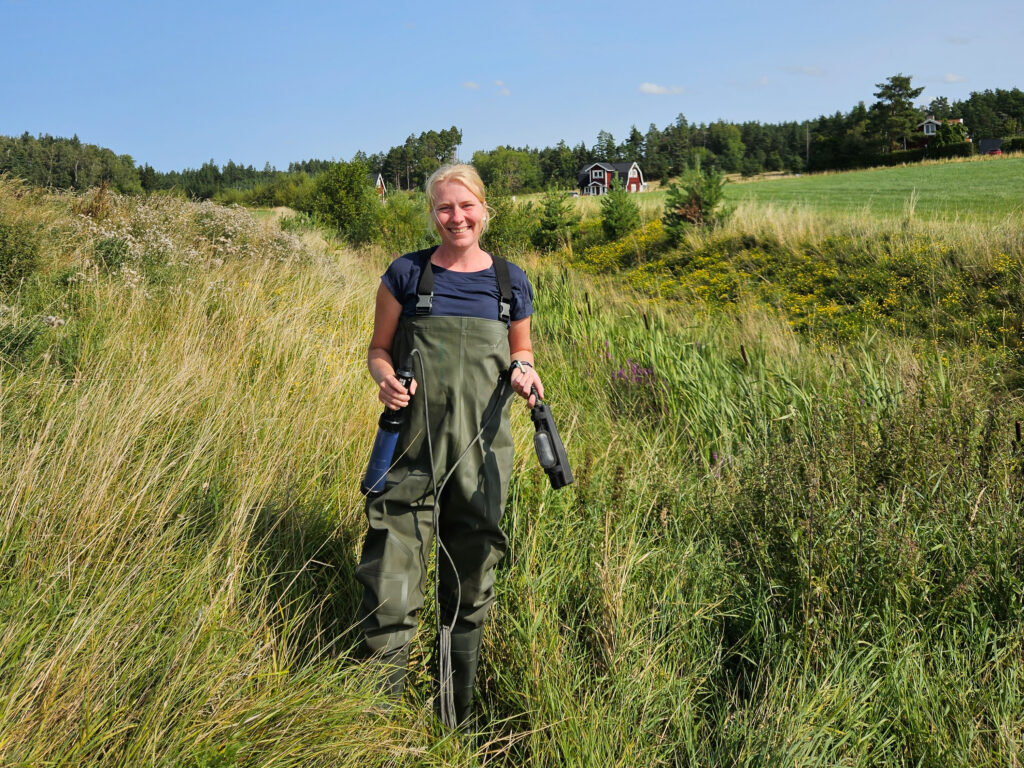
To support the development of knowledge on measures to combat eutrophication, BalticWaters awarded Magdalena Bieroza a grant for water quality monitoring to improve understanding. She has assessed which factors influence the effectiveness of individual measures and whether they can lead to significant improvements in water quality. Magdalena notes that climate change will increase nutrient losses from agricultural land into watercourses and that we must therefore make extensive efforts to curb this leakage. In her project, she demonstrates that measures need to target nutrient losses at every stage from land to water. This involves growing catch crops, establishing wetlands and two-stage ditches – measures which, when combined, create synergies and enhance their combined effectiveness.
The findings are valuable for decision-makers at a time when we need knowledge about how nutrient leaching is affected by a warmer climate and which measures are most effective in curbing eutrophication. Magdalena’s research shows that individual measures scattered across the landscape will not lead to significant improvements in water quality unless they are applied strategically and in combination with one another.
– The authorities have an important role to play in providing financial support for various measures. A strategic, holistic approach is needed to reduce eutrophication in the Baltic Sea, says Magdalena.
The otoliths of cod reveal whether the fish has been exposed to oxygen deprivation
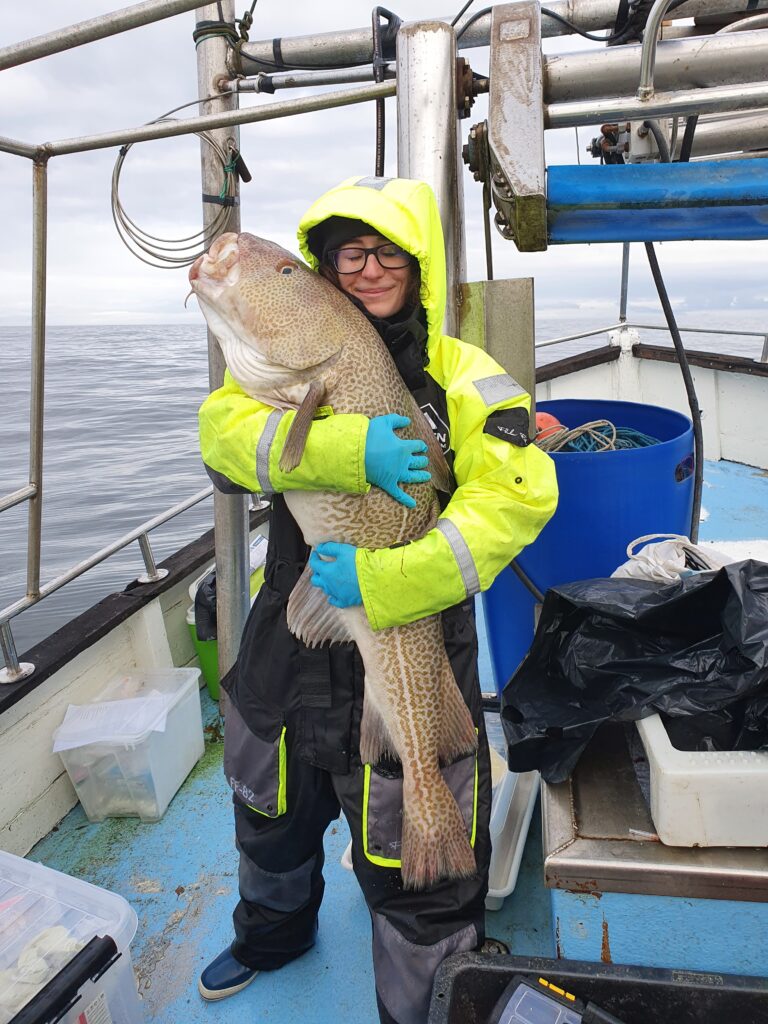
In an ecosystem, everything is interconnected – eutrophication, which ultimately leads to oxygen depletion, also affects marine life. A keystone species in the Baltic Sea, the cod, is affected in many different ways by eutrophication and oxygen depletion. The project, How do oxygen depletion and parasites affect cod growth?, led by Ulf Bergström, took an in-depth look at the effects of two stress factors on cod: oxygen depletion and parasites. Examinations of the fish’s earstones (otoliths) revealed that oxygen depletion itself, despite a good food supply, has negative effects on cod growth and condition. The results also show that cod from the Sea of Åland, where oxygen conditions are good unlike in the southern Baltic Sea, were in better condition and grew better. Cod from that area were also more resistant to liver parasites. The oxygen deficiency, which is widespread in many deep areas of the Baltic Sea, thus has a negative impact on cod fitness and growth.
Previous studies have attributed cod’s low growth to a lack of food, as cod’s key prey species are wiped out due to oxygen deficiency. However, this study shows that oxygen depletion in itself can have a direct impact on the cod’s bodily functions and also appears to be behind the cod’s slow growth. To improve conditions for the cod, efforts to reduce eutrophication must be stepped up – this will, in the long term, reduce the spread of oxygen-depleted areas. To help cod in the short term, one measure could be to improve access to herring and sprat, which are important prey for cod, particularly in those parts of the Baltic Sea where cod growth is low.
– The Sea of Åland is a haven for cod, where oxygen levels and access to bottom-dwelling prey are good. The area still has plenty of large cod. These cod may therefore be particularly important for the stock as a whole, says Ulf.
Helping cod to thrive through artificial reefs
Another project that has also focused on cod is Hanö Cod Reef. The aim of the project was to test whether artificial reefs can benefit the endangered Baltic Sea cod by creating environments that offer greater protection from seals and cormorants. In total, the project has deployed 35 modules that have formed an artificial reef for the fish. The results are clear – the reefs were appreciated by the cod and offered the fish potential protection from predators. The cavities in the reefs provide an environment distinct from the surroundings, and some cod have now taken up residence in the reef’s holes. At times, species other than cod have also been found in the reef area, such as seven-spined stickleback and flatfish.
The reefs have potentially improved the situation for cod by increasing their chances of survival. Another important outcome is the significant interest in Baltic Sea cod and its situation that the project has generated during its implementation. The results have received considerable attention in both local and national media and have fostered optimism regarding the return of cod. The project proved to be an effective way of generating engagement with Baltic Sea issues by taking viewers beneath the water’s surface using underwater cameras.
Knowledge of fish life cycles – crucial for management decisions
In order to manage our Baltic Sea fish stocks sustainably, we need to understand how the fish live and grow. A key piece of the puzzle is the fish’s maximum lifespan, as this determines how long the fish can reproduce. This knowledge is vital for setting sustainable catch levels for our commercial species.
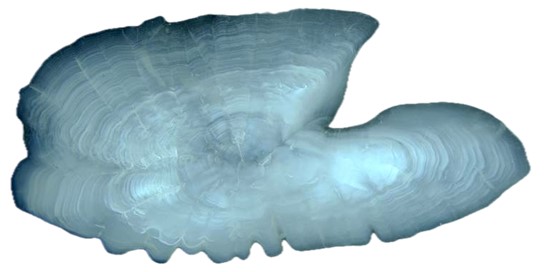
By counting the rings in the fish’s earstones, the otoliths, it is possible to estimate how long herring and sprat live in the Baltic Sea. Previous estimates suggest that these fish appear to live for more than 20 years – a surprisingly long life for a small Baltic Sea fish. But is this really the case? In the project Increasing knowledge about herring and sprat, researchers used a special technique called the bomb pulse method to test age estimates for Baltic Sea fish for the first time. The results confirmed previous age determinations made using otoliths and show that the method has great potential for further use in determining the age and lifespan of species where such knowledge is currently lacking.
– Misjudgements of fish age can lead to catches that exceed the population’s ability to recover. This can in turn lead to both reduced fishing productivity and negative consequences for the Baltic Sea ecosystem, says Allen Andrews, one of the researchers on the project.
The 2022 project in figures
6 scientific manuscripts, of which 4 were published
8 oral presentations at scientific conferences
3 popular science publications
19 presentations to the general public in various forums
5 appearances on radio and TV
4 new research projects building on the project’s results (of which 2 are with Denmark)
Conclusion
Funding through BalticWater’s programme for research projects and pre-studies has provided important evidence to inform decisions on effective measures to combat eutrophication, understand the challenges facing cod, and determine how to help the fish recover. Several of the projects have also had significant communicative value, spreading knowledge and hope for a vibrant sea. This knowledge is of use to managing authorities and decision-makers, and forms the basis for new research projects and collaborations.